Category: Research

  • Building Environmental Intelligence for Vietnam and Southeast Asia: Insights from the TLU–VinUni–CSIRO Workshop

    Building Environmental Intelligence for Vietnam and Southeast Asia: Insights from the TLU–VinUni–CSIRO Workshop


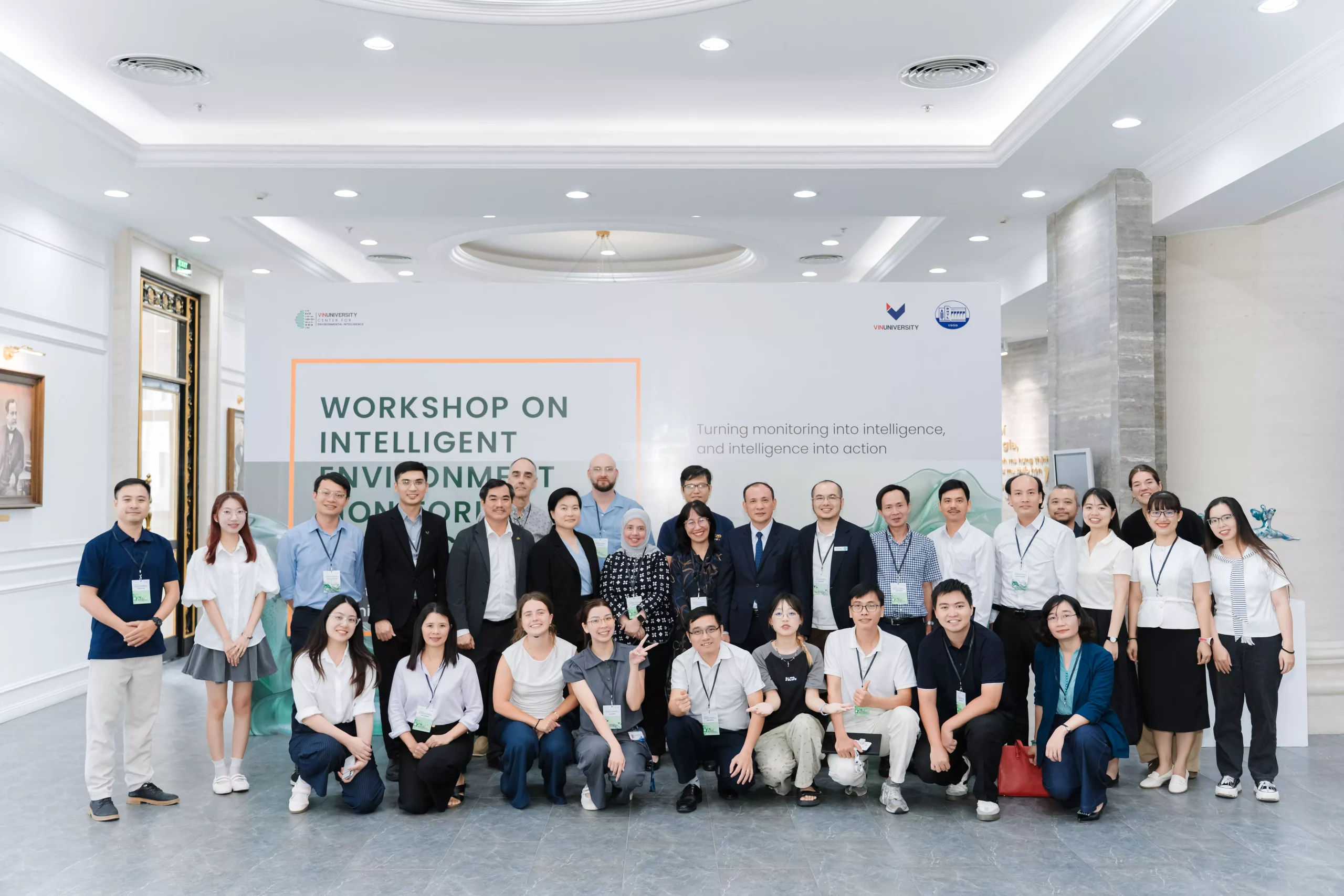
    On 4 September 2026, in Hanoi, Thuyloi University, together with VinUniversity and the Commonwealth Scientific and Industrial Research Organisation (CSIRO), Australia, successfully co-organised the Workshop on Intelligent Environment Monitoring and Forecasting. The workshop aimed to create a platform for cross-disciplinary and cross-sector knowledge exchange, and to discuss how environmental intelligence can better support sustainable development in Vietnam and the wider Southeast Asian region. The event brought together more than 100 delegates from universities, government agencies, including the Vietnam Ministry of Agriculture and Environment, international organisations (UNESCO, FAO of the UN), the Australian Embassy in Vietnam, as well as researchers, lecturers and students from universities and research institutions in Hanoi and beyond.
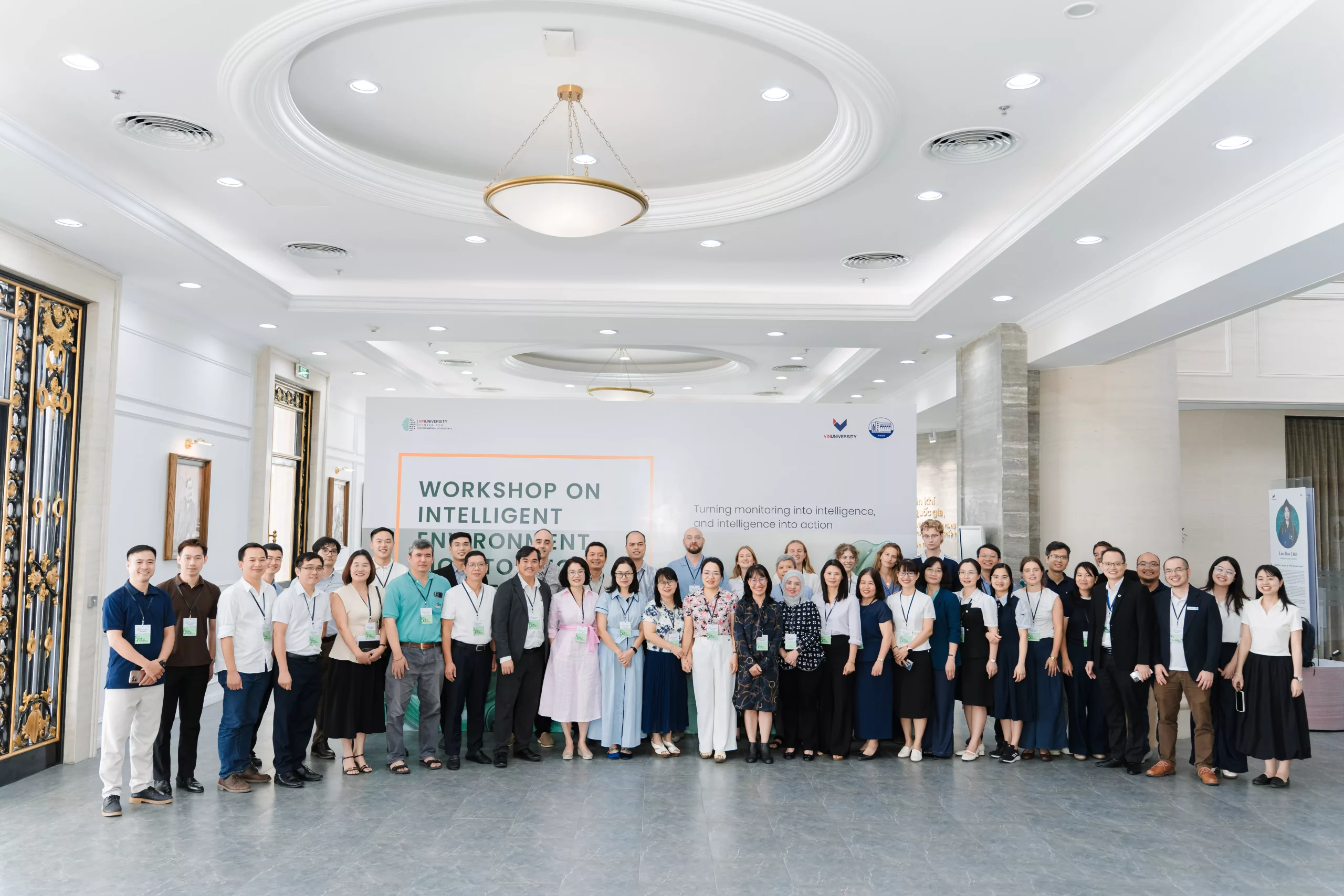
    Building Environmental Intelligence for Vietnam and Southeast Asia: Insights from the TLU–VinUni–CSIRO Workshop

    The workshop opened with remarks from Prof. Laurent El Ghaoui, Vice Provost of VinUniversity, followed by keynote presentations from representatives of the Department of Hydraulic Works Management and Construction (Vietnam Ministry of Agriculture and Environment), CSIRO, FAO, and researchers from Thuyloi University and VinUniversity. The keynote speakers shared recent advances in intelligent environmental monitoring and forecasting technologies in both Vietnam and Australia, addressing challenges in environmental monitoring, management, and water quality assessment. The presentations highlighted growing interest in the use of artificial intelligence, digital twins, Earth observation, advanced sensing, low-cost sensors, and early-warning systems to strengthen environmental monitoring, forecasting and decision support in Vietnam and internationally.
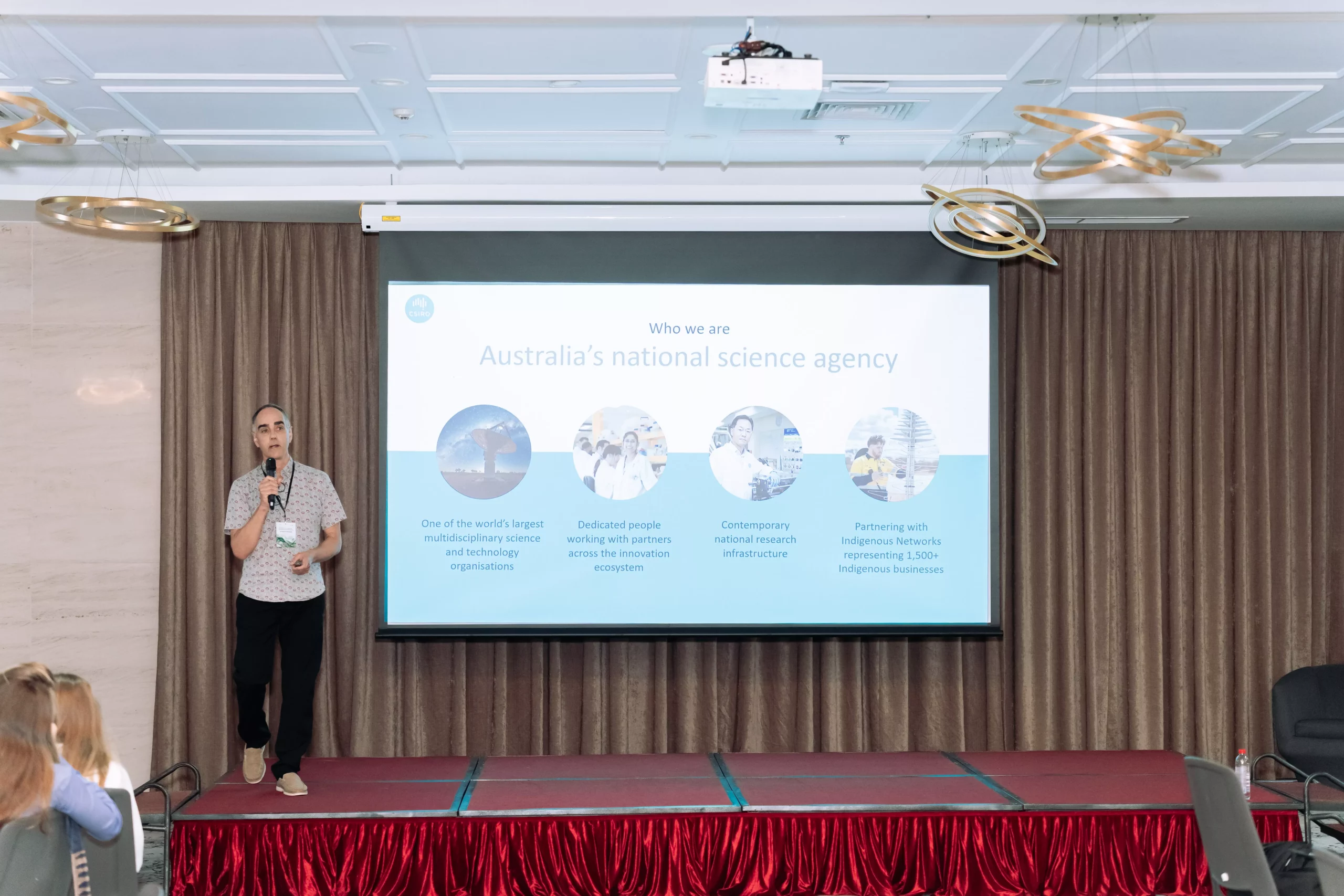
    Building Environmental Intelligence for Vietnam and Southeast Asia: Insights from the TLU–VinUni–CSIRO Workshop

    The workshop also featured an interdisciplinary exchange session (Operational Readiness Sprint) bringing together domestic and international participants. Discussion groups actively examined the strengths and limitations of current approaches involving AI, IoT, Digital Twin, remote sensing and Earth Observation technologies. A recurring theme across the groups was that one of the greatest challenges remains the fragmented, poorly integrated data ecosystem, along with limited institutional mechanisms for sharing data and for translating research pilots into sustained operational systems. Building on this, participants jointly proposed pressing environmental issues to address at the local level, with the Red River and Mekong systems among the locations suggested for potential future pilots. In addition, the groups proposed developing a secure, accessible and cost-effective data-sharing system.
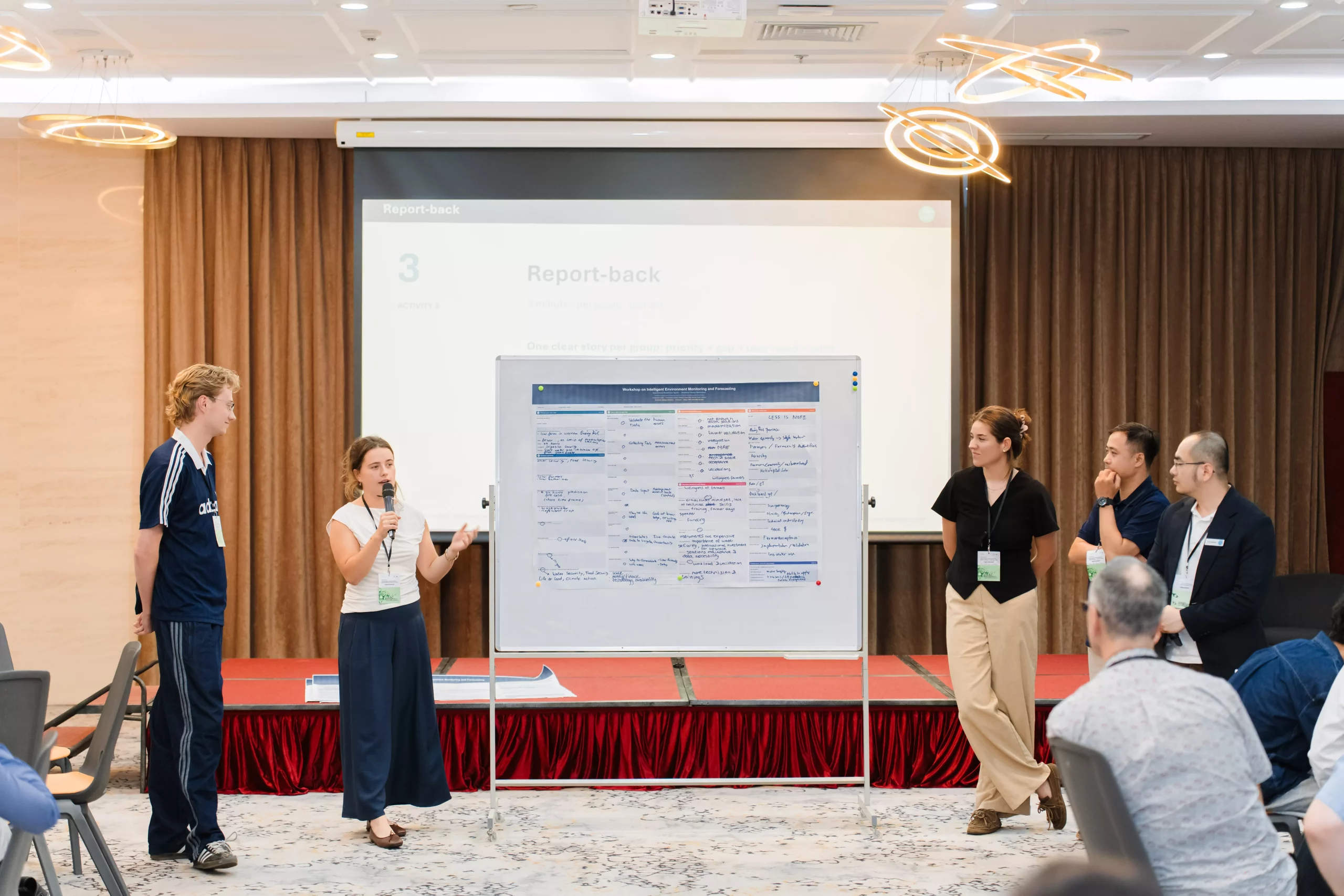
    Building Environmental Intelligence for Vietnam and Southeast Asia: Insights from the TLU–VinUni–CSIRO Workshop

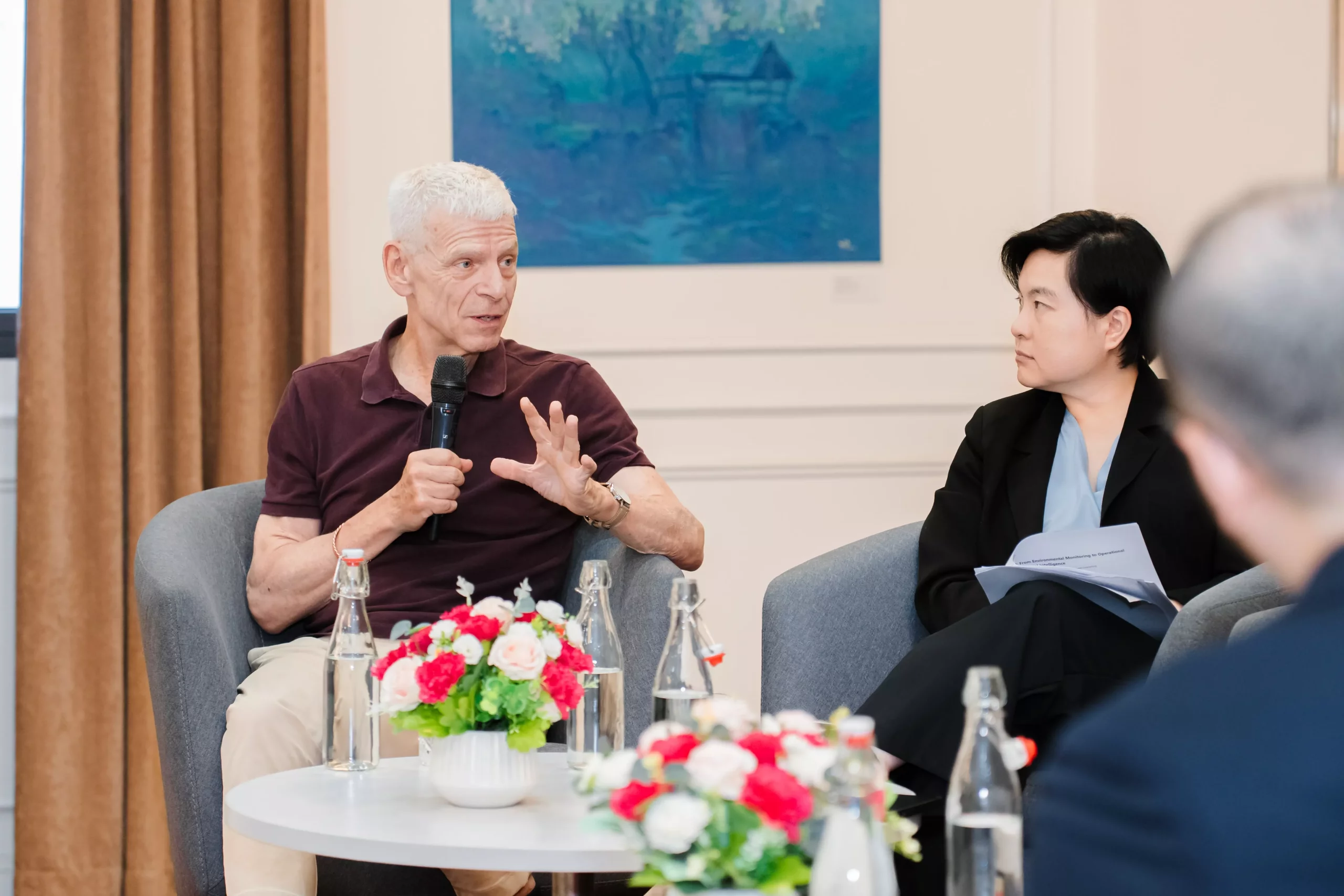
    The workshop concluded with a special high-level panel discussion moderated by Dr Duy Nguyen, Water Quality Modelling Lead with AquaWatch Australia and an environmental scientist at CSIRO. The panel featured distinguished leaders and scholars, including Prof. Nguyen Trung Viet (President of Thuyloi University), Prof. Laurent El Ghaoui (Vice Provost of VinUniversity), Ms. Lina Wong (Economic Counsellor, Australian Embassy in Vietnam), Dr. Tim Malthus (Senior Principal Research Scientist in CSIRO), and Dr. Bui Du Duong (Vice President, Water Research Institute, NAWAPI, Vietnam’s Ministry of Agriculture and Environment).
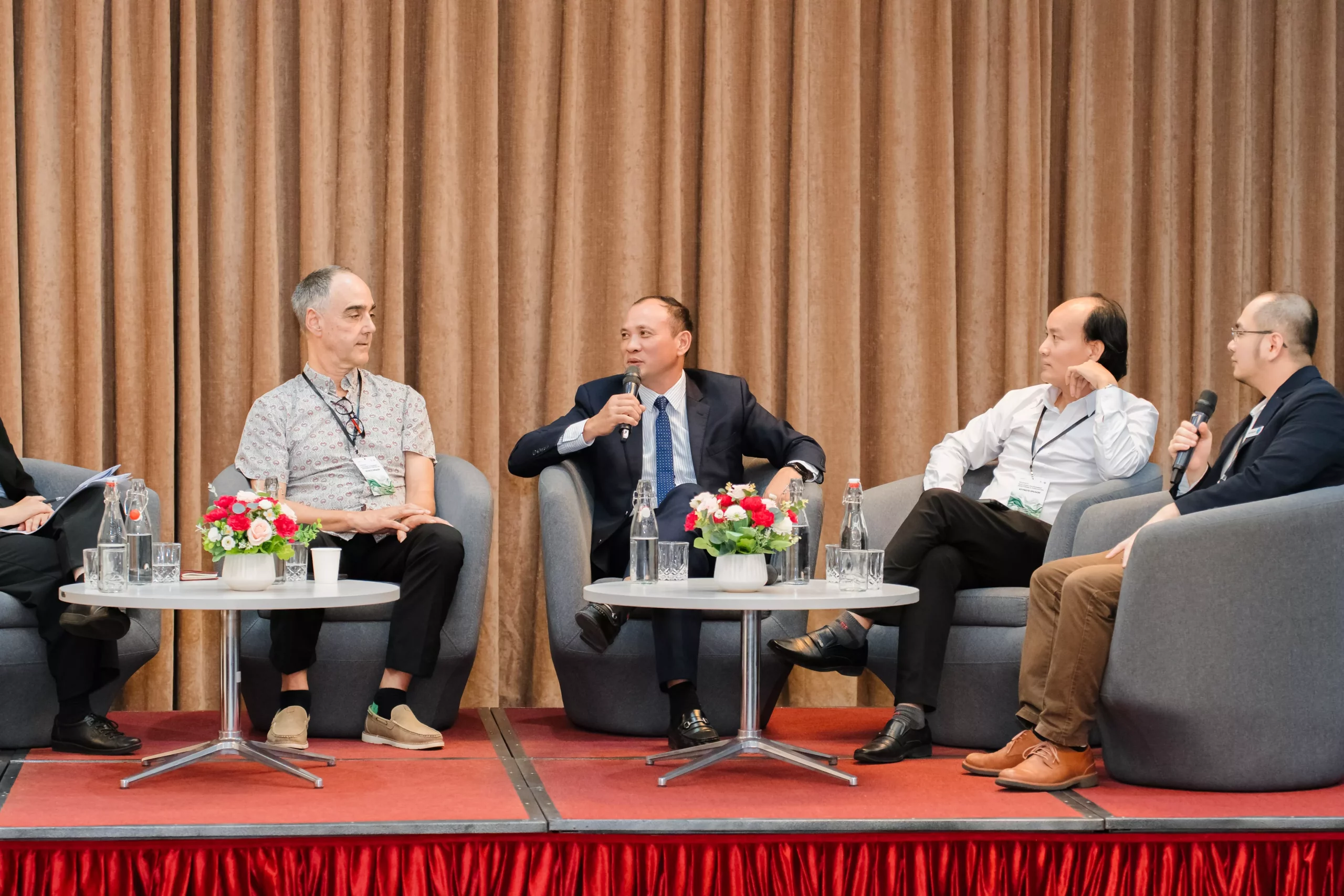
    Building Environmental Intelligence for Vietnam and Southeast Asia: Insights from the TLU–VinUni–CSIRO Workshop

    Under the theme “From Environmental Monitoring to Operational Environmental Intelligence: Opportunities for Vietnam and Southeast Asia,” the panel centred on a key overarching question: What is the biggest gap between current environmental monitoring and research capacity and a truly operational environmental intelligence system capable of supporting real-world decisions and remaining sustainable over the long term? During the discussion, Experts and policy representatives explored several interconnected challenges in moving from monitoring and research towards operational environmental intelligence, including model uncertainty, the practical role of artificial intelligence, data sharing and institutional coordination, sustainable financing, and pathways for translating research into operational services. Specifically:

    1. Model uncertainty: Panellists agreed that uncertainty is an inherent feature of environmental observations and forecasting systems and cannot be eliminated entirely. The challenge is therefore not only to quantify uncertainty, but also to communicate it clearly and meaningfully so that decision-makers understand the level of confidence, possible range of outcomes and implications for action.
    2. The practical role of AI: Panellists recognised the significant potential of AI to integrate large and diverse datasets and improve environmental analysis and forecasting. At the same time, AI should not be treated as a “black box”. Approaches such as Explainable AI and Physics-informed AI, and stronger integration between data-driven and process-based models, were highlighted as important for building transparency, trust and operational confidence.
    3. From research to sustained operations: A major gap remains in moving promising research and pilot projects into systems that can be maintained, scaled and used operationally. Panellists highlighted fragmented data, limited data-sharing mechanisms, unclear institutional responsibilities, long-term funding constraints and the need for stronger coordination among research organisations, government agencies and end users. Co-design should begin from the earliest stages, so that the research question, data requirements, operational responsibilities and decision needs are defined together.

    Ms Lina Wong also highlighted the importance of investment, financing and international cooperation in helping promising research move beyond the laboratory and pilot stage. Approaches such as blended finance, public–private partnerships and bilateral or regional cooperation can help bridge the gap between research and implementation, enabling successful technologies and services to be sustained and scaled in response to growing environmental and climate risks.
    Building Environmental Intelligence for Vietnam and Southeast Asia: Insights from the TLU–VinUni–CSIRO Workshop

    In the closing round, panellists were asked what practical change they would like to see over the next three years as evidence that Vietnam had genuinely progressed towards operational environmental intelligence. Responses pointed not only to the wider deployment of advanced, lower-cost, low-maintenance sensors and the better integration of large environmental datasets, but also to stronger institutional collaboration. A key measure of progress would be the ability of government agencies, universities, research organisations, international partners and other stakeholders to share data, align responsibilities and jointly develop, operate and sustain environmental information systems.

    Building on the panel discussion, Prof. Nguyen Trung Viet, President of Thuyloi University, outlined three areas through which TLU, as an academic and research institution, can contribute to this transition:

    • Strengthening capacity building and technology transfer: Thuyloi University can continue to strengthen its role as a hub for capacity building and technology transfer, supporting the technical and technological capabilities required by practitioners and system operators at national and local levels.
    • Sustaining research and continuous improvement: Continued field observations and data collection will remain important for refining AI algorithms, improving models and ensuring that operational systems can adapt to changing environmental, climatic and technological conditions.
    • Bridging funding and policy: Real-world evidence from research and pilot activities can provide a stronger basis for developing future project pipelines, attracting bilateral and international funding, supporting policy engagement, and building long-term partnerships rather than isolated short-term initiatives.

    The workshop concluded with a shared commitment to strengthening collaboration among research, government, industry, and international partners, while opening new opportunities for Thuyloi University to contribute its research, training, and technical expertise to the development of operational environmental intelligence in Vietnam and the wider Southeast Asian region.
    Building Environmental Intelligence for Vietnam and Southeast Asia: Insights from the TLU–VinUni–CSIRO Workshop

    By Vu Huong Ngan – Department of Science, Technology and International Cooperation

    Photos: VinUni
     

  • Lecturers From Thuyloi University Granted Patent for New Measurement Method

    Lecturers From Thuyloi University Granted Patent for New Measurement Method

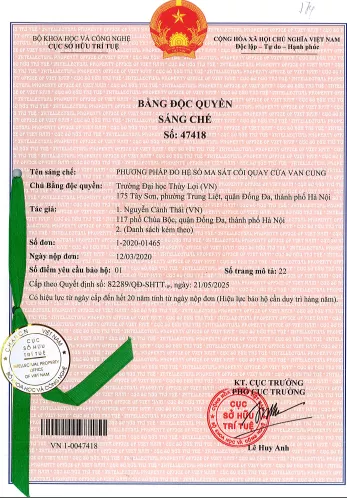
    A team of lecturers from Thuyloi University has recently been granted a patent by the Intellectual Property Office of Vietnam (Ministry of Science and Technology) for their research work entitled “Method for Measuring the Friction Coefficient of the Trunnion in Radial Gates”.

    Lecturers From Thuyloi University Granted Patent for New Measurement Method Lecturers From Thuyloi University Granted Patent for New Measurement Method​

    Radial gates are critical structural components in hydraulic works, directly related to the safety and operational efficiency of the entire system. Large river barrage projects require extremely high standards for gate systems, which must perform functions such as water retention, flood discharge, and ensuring navigational conditions.
    A radial gate has an arc-shaped cross-section, with its center coinciding with the pivot point. The water-blocking part consists of assembled skin plates connected to a truss frame, which transfers forces to the piers through the trunnions. This structural design gives radial gates high load capacity and mechanical advantage: when the gate rotates around the trunnion, part of its weight is transferred to the piers, and the arc-shaped face can use water pressure to reduce the force needed for lifting. Therefore, the trunnion is a particularly important part of the radial gate.

    Lecturers From Thuyloi University Granted Patent for New Measurement Method

    Thực tế ăn mòn và suy giảm chất lượng của chất bôi trơn của bộ phận bạc cầu cối quay

    Việc kiểm tra, đánh giá chính xác lực ma sát tại cối quay của cửa van có vai trò quyết định đến an toàn và hiệu quả vận hành của toàn bộ công trình. Hiện nay ở nước ta phương pháp đo hệ số ma sát cối quay tại hiện trường vẫn chưa được nghiên cứu và đề xuất.

    Thông qua quá trình nghiên cứu trạng thái ứng suất – biến dạng của cụm cối quay bằng mô hình số và mô hình vật lý, các tác giả đã xây dựng được phương pháp đo hệ số ma sát cối quay cửa van cung với độ chính xác, độ tin cậy cao và có thể dễ dàng thực hiện tại hiện trường trong điều kiện vận hành bình thường của công trình.

    Việc được cấp bằng Độc quyền sáng chế không chỉ là sự ghi nhận xứng đáng cho nỗ lực không ngừng của các tác giả, mà còn khẳng định mạnh mẽ năng lực nghiên cứu khoa học và tiềm năng ứng dụng công nghệ của Trường Đại học Thuỷ lợi. Sáng chế này được kỳ vọng sẽ sớm được chuyển giao và áp dụng rộng rãi vào thực tiễn, góp phần nâng cao hiệu quả quản lý, vận hành và đảm bảo an toàn cho các công trình Thuỷ lợi, Thuỷ điện trên cả nước.

    Nhóm nghiên cứu

  • General Secretary: Science and Technology is the Only Path to National Development

    General Secretary: Science and Technology is the Only Path to National Development

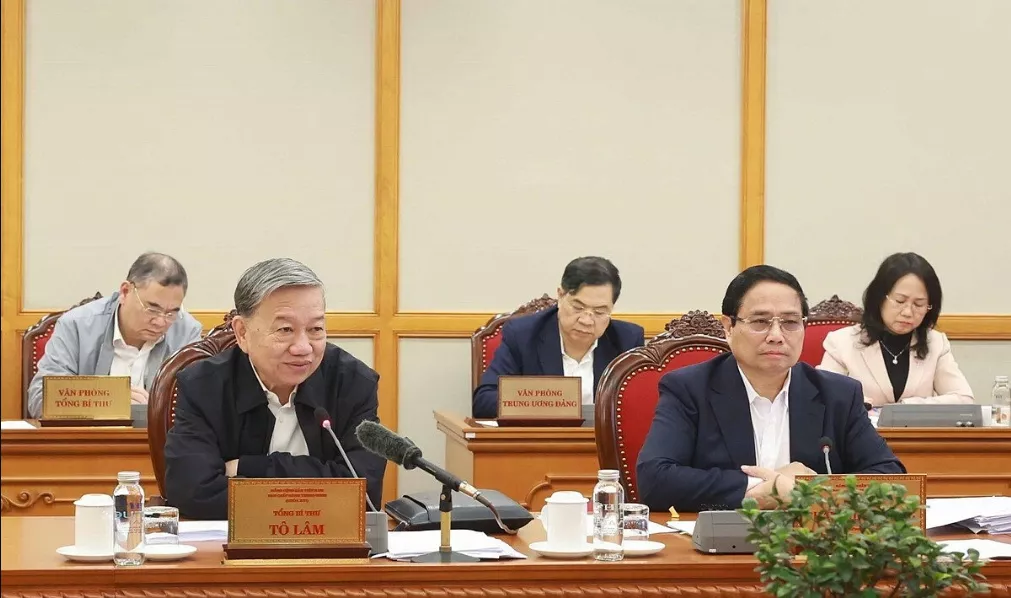
    On April 1, General Secretary To Lam chaired a meeting of the Politburo and the Secretariat to hear reports on updated knowledge and give opinions on finalizing the thematic report on breakthroughs in the development of science, technology, innovation, and digital transformation.

    After listening to the reports, General Secretary To Lam stated that this update is part of the working plan and program of the Politburo and the Secretariat. This activity demonstrates the highest determination of the Party and State leadership to successfully implement Politburo Resolution No. 57 on breakthroughs in the development of national science, technology, innovation, and digital transformation.

    According to the General Secretary, to successfully lead, direct, and implement the resolution, members of the Politburo and the Secretariat have taken the lead in updating their knowledge in this new, challenging, and constantly evolving field.

    Affirming that the development of science, technology, innovation, and digital transformation is “a compulsory choice, the only path to bring the country forward and improve the lives of the people,” the General Secretary requested that agencies vigorously implement actions to achieve two top goals: improving social governance and applying these advances to production to increase labor productivity.

    General Secretary: Science and Technology is the Only Path to National Development

    General Secretary To Lam and Prime Minister Pham Minh Chinh at the meeting. 

    However, the Party leader also observed that, up to now, science and technology have mainly been applied in social governance, while their use in production to enhance labor productivity has not received adequate attention. Meanwhile, private enterprises have been quick and flexible in adopting and implementing these solutions effectively, contributing to improved corporate governance, data management, as well as increased productivity and product quality. Therefore, all levels “must closely follow reality to broaden their approaches.”

    The General Secretary requested the Government to incorporate the opinions of Politburo and Secretariat members to finalize the report for the 11th Plenum of the 13th Central Committee as planned. The report should focus on updating global trends in science, technology, digital transformation, and innovation, while clearly identifying specific issues and implementation solutions to address limitations, avoiding vague statements, and ensuring unified awareness and action across the entire political system.

    The Office of the Party Central Committee was assigned to gather feedback from the meeting, supplement, and refine the programs and plans to effectively advise on the implementation of Politburo Resolution No. 57.

    On December 22, 2024, the Politburo issued Resolution No. 57, affirming that the development of science, technology, innovation, and national digital transformation is a top strategic breakthrough and a key driving force for developing modern productive forces, perfecting production relations, renewing national governance methods, promoting socio-economic development, preventing the risk of falling behind, and propelling the country to make breakthroughs in the new era.

    Source: https://vnexpress.net/tong-bi-thu-khoa-hoc-cong-nghe-la-con-duong-duy-nhat-dua-dat-nuoc-phat-trien-4868717.html

  • Thuyloi University Holds Workshop on “Causes and Solutions of Coastal Erosion in Central Vietnam”

    Thuyloi University Holds Workshop on “Causes and Solutions of Coastal Erosion in Central Vietnam”

    Thuyloi University Holds Workshop on “Causes and Solutions of Coastal Erosion in Central Vietnam”

    The workshop was attended by Prof. Dr. Nguyen Trung Viet, President of Thuyloi University and Principal Investigator of the project. On the project team’s side, many scientists, experts, lecturers, and graduate students from various universities, research institutes, and related enterprises both inside and outside the university participated.

    Thuyloi University Holds Workshop on “Causes and Solutions of Coastal Erosion in Central Vietnam”

    In his opening remarks, Prof. Dr. Nguyen Trung Viet provided updates on the project’s progress, requirements, and responsibilities in implementing the tasks under Program 562. He emphasized the importance of ensuring quality and timely completion of project deliverables ahead of the program’s conclusion on November 30, 2025. He also expressed appreciation for the research team’s efforts and for the valuable support from organizations such as Portcoast Corporation, the Vietnam Academy for Water Resources, and international scientists.

    Thuyloi University Holds Workshop on “Causes and Solutions of Coastal Erosion in Central Vietnam”

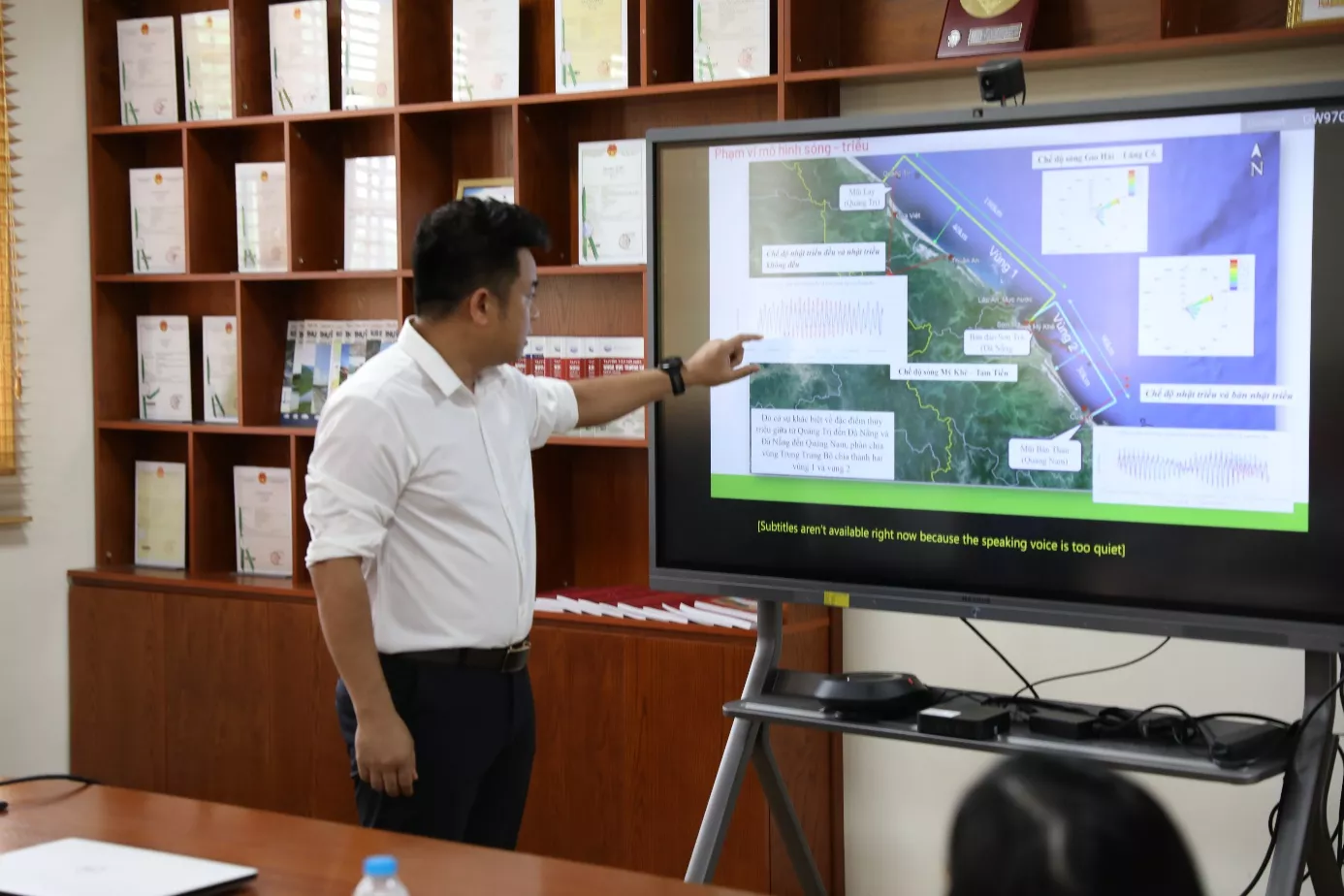
    During the workshop, the project team presented initial research findings on coastal erosion patterns at four typical locations in Central Vietnam: Cua Tung (Quang Tri), Lang Co (Thua Thien Hue), Tan Thanh (Quang Nam), and My Khe (Da Nang). Among them, My Khe Beach was selected as the main study site for proposing technical solutions to stabilize the shoreline.

    The scientific report, delivered by Assoc. Prof. Dr. Le Nhat Quang (Deputy Principal Investigator) and other team members, focused on three main objectives:

    1. Developing a mathematical modeling toolkit for assessing and forecasting beach morphological changes;
    2. Analyzing hydro–sedimentary dynamics and erosion mechanisms;
    3. Proposing both structural and non-structural solutions to stabilize My Khe Beach’s shoreline.

    Thuyloi University Holds Workshop on “Causes and Solutions of Coastal Erosion in Central Vietnam”

    The study applied advanced technologies such as UAVs, remote sensing imagery, continuous monitoring cameras, wave – current – sediment numerical modeling, laser scanning surveys, and modern topographic measurement equipment. Field surveys and analyses recorded significant erosion rates in the study areas, particularly during the Northeast monsoon season. Based on these findings, several engineering options, such as Y-shaped groynes and submerged wave energy dissipation structures, were proposed and modeled to assess their effectiveness.

    Thuyloi University Holds Workshop on “Causes and Solutions of Coastal Erosion in Central Vietnam”​

    During the discussion session, scientists provided valuable feedback on computational modeling, input data quality, the economic and technical feasibility of the proposed solutions, and the potential for broader application to other coastal regions.

    In his closing remarks, Prof. Dr. Nguyen Trung Viet commended the research team for their diligence and openness to feedback. He encouraged further scholarly exchange to refine the study and ensure timely acceptance at the national level. The professor also expressed hope that the project’s results would make significant contributions to the planning, protection, and sustainable development of Central Vietnam’s coastline in the face of increasing climate change impacts.


  • Lecturer from Thuyloi University Receives Patent Certificates

    Lecturer from Thuyloi University Receives Patent Certificates

    In recent years, intellectual property activities at Thuyloi University have seen strong growth, underscoring their important role in promoting applied research and innovation. An increasing number of lecturers and scientists from the university have proactively registered for the protection of their research outcomes, particularly patents and utility solutions. Many works have been granted patents by the Intellectual Property Office of Vietnam (Ministry of Science and Technology), affirming the novelty, creativity, and high applicability of research conducted by the university’s staff.

    Recently, the inventors including Dr. Le Trung Phong, Assoc. Prof. Dr. Nguyen Canh Thai, Assoc. Prof. Dr. Ho Sy Tam –Thuyloi University, and Dr. Nguyen Phi Long – the Vietnam Aviation Academy, were granted two patent certificates:

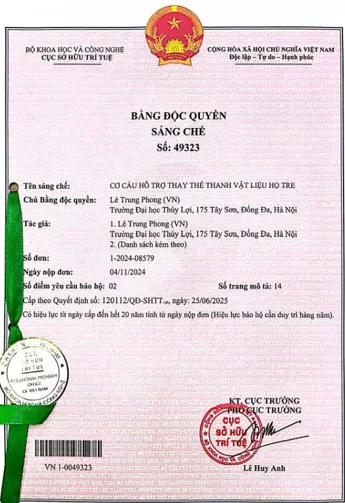
    Patent No. 49323 “Mechanism for Replacing Bamboo-like Material Rods” (Decision No. 120112/QĐ-SHTT, dated June 25, 2025):

    Lecturer from Thuyloi University Receives Patent Certificates

    This invention relates to a mechanism for replacing bamboo-like material rods (200), consisting of a steel clamp (201), a support arm, threaded support rods, and an auxiliary clamp. The semi-circular steel clamps are fastened together using steel clamp bolts (207) to secure columns made of bamboo-like rods, with pads (205) inside each semi-circle to hold the rods in place. The triangular support arm (202) connects to two layers of steel clamps (201) on one side, while the other side features a threaded hole for the threaded support rods (203), allowing adjustment of the height of the auxiliary clamp (204). One end of each threaded support rod (203) connects to the auxiliary clamp (204), which consists of two halves joined together with auxiliary clamp bolts (206).

    Patent No. 49325 “Bamboo-like Material Truss Frame Assembly Mechanism and Truss Frame Assembly Mechanism with Bamboo-like Material Rod Replacement Support” (Decision No. 120154/QĐ-SHTT, dated June 25, 2025):

    Lecturer from Thuyloi University Receives Patent Certificates

    This invention relates to a truss frame assembly mechanism with a bamboo-like rod replacement support, including an assembly mechanism, a replacement mechanism, and steel pads. The assembly mechanism fixes bamboo-like rods together to form columns and beams in a truss frame conveniently; the steel pads maintain proper spacing between rods in the structure; and the replacement mechanism allows for flexible replacement of bamboo-like material beams without altering the structure or load-bearing capacity of the entire frame.

    Intellectual property activities not only help protect the legal rights of authors but also create opportunities for technology transfer, commercialization of scientific products, and practical contributions to socio-economic development, while enhancing the university’s academic reputation. Thuyloi University has been developing strong support mechanisms for registering, exploiting, and managing intellectual property assets, gradually building an innovation ecosystem closely linked to the practical needs of the Water Resources and Environmental sectors.

    P9