Category: Faculty of Economics and Management

  • Master’s Program in Economic Management

    Introduction

    The Master’s Program in Economic Management at the Faculty of Economics and Management, Thuyloi University, is an application-oriented graduate program for professionals in public administration, enterprises and development organizations who seek advanced competence in economic governance, policy and management. The program strengthens learners’ capacity to analyze economic problems, design and evaluate policies, plan and manage investment and development, and lead organizations through digital transformation. Through a 60-credit curriculum combining advanced coursework, two special topic internships and a master’s graduation project, learners develop the ability to address complex practice-based problems in economic management.

    Highlights

    • Application-oriented curriculum completed in 1.5 years (three semesters), totaling 60 credits.
    • A common foundation in economics for managers, management science, quantitative methods, public policy and law, strategic management and human resource management.
    • A broad pool of 24 elective courses covering state management of the economy, policy analysis, development and international economics, investment economics, cost-benefit analysis, finance and accounting, risk management, supply chains, digital transformation and construction management.
    • Strong practical component, including two special topic internships (7 credits) and an 8-credit master’s graduation project addressing a practice-based problem.
    • Teaching by experienced academic staff with research expertise in public policy, resource and development economics, investment and quantitative analysis.

    Objectives

    The program aims to enable graduates to:

    • apply advanced knowledge of economics, management science and public policy to economic management at the organizational, sectoral and local levels;
    • use research methods and quantitative tools to analyze economic information, forecast trends, and appraise policies, programs and investment projects;
    • formulate, implement, monitor and evaluate strategies, plans and policies for economic and social development;
    • manage resources, risks, finance and people effectively and lead change, including digital transformation, in public and private organizations; and
    • work independently, exercise professional judgment, communicate evidence-based recommendations and pursue further study at doctoral level when appropriate.

    Career prospects

    Graduates are prepared for managerial and advisory roles in state management agencies at central and local levels, public service units, state-owned and private enterprises, banks and financial institutions, project management units, consulting firms, international and non-governmental organizations, and research and educational institutions. Typical areas of work include economic and policy analysis, development planning, investment management and appraisal, public finance and budgeting, enterprise management, and monitoring and evaluation. The program also provides a foundation for progression to the Doctoral Program in Economic Management.

    Academic staff

    Selected doctoral-level academic staff teaching in the program include:

    Name Teaching and research areas
    Assoc. Prof. Dr. Le Van Chinh Policy impact analysis; state management of investment and of the economy; resource economics; construction economics
    Assoc. Prof. Dr. Nguyen Thien Dung Resource and environmental economics and policy; economic and financial appraisal of investment projects; circular economy
    Dr. Phung Mai Lan Policy impact evaluation; international trade; macroeconomic analysis and forecasting
    Dr. Do Van Chinh Economic efficiency analysis; cost management; risk management; investment project management
    Dr. Le Minh Thoa Sectoral state management; investment project management; cost management
    Dr. Bui Anh Tu Resource economics and management; construction investment economics; water resources economics
    Assoc. Prof. Dr. Truong Duc Toan Public economics and management; investment risk management; policy analysis
    Dr. Nguyen Thi Thanh Huyen Policy impact evaluation; international trade; macroeconomic analysis and forecasting
    Dr. Nguyen Anh Tuyet Macroeconomic policy; economic forecasting; firm productivity and FDI spillovers
    Dr. Le Phuong Thao Policy impact evaluation; economic growth and structural change; technological change
    Dr. Phan Thuy Thao Investment mobilization and management (FDI, ODA, public investment); state management of investment

    Curriculum structure

    The 2026 curriculum (subject to official approval by Thuyloi University) comprises 60 credits distributed across the following blocks:

    Curriculum block Credits Share of program
    General knowledge 9 15%
    Foundation knowledge 12 20%
    Specialized electives 24 40%
    Special topic internships and master’s graduation project 15 25%
    Total 60 100%

    Indicative study plan by semester

    Semester Credit load Main components
    Semester I 20 credits Scientific Research Methodology; English; five foundation courses; 4 credits of specialized electives.
    Semester II 23 credits Advanced Strategic Management; 18 credits of specialized electives; Special Topic Internship 1 (3 credits).
    Semester III 17 credits Philosophy (3 credits); 2 credits of specialized electives; Special Topic Internship 2 (4 credits); Master’s Graduation Project (8 credits).

    General and foundation courses

    Code Course title Credits Semester
    SRM502 Scientific Research Methodology 2 I
    WUEL502 English 4 I
    WUPH501 Philosophy 3 III
    EEM501 Economics for Managers 2 I
    ECM508 Advanced Management Science 2 I
    EQM502 Quantitative Methods for Management 2 I
    BAHM507 Advanced Human Resource Management 2 I
    BAPL512 Public Policy and Law 2 I
    BASM509 Advanced Strategic Management 2 II
      Total 21  

    Specialized elective pool

    Students complete 24 credits from the following 24 approved elective courses (2 credits each; 48 credits offered), subject to the official study plan and course availability.

    No. Code Course title (2 credits) Semester
    1 ECM520 Advanced Management Information Systems I
    2 ASME526 Advanced State Management of the Economy I
    3 EPA503 Economic Policy Analysis and Assessment II
    4 BAAG525 Advanced Game Theory Applications in Economics and Business I
    5 EIE505 Advanced International Economics II
    6 BARM517 Advanced Risk Management in Economics and Business II
    7 ECM513 Science and Technology Management II
    8 ADE508 Advanced Development Economics II
    9 BADT511 Leading Digital Transformation II
    10 BAMA520 Advanced Managerial Accounting II
    11 AFBA508 Advanced Corporate Financial Analysis II
    12 ESP509 Economic Development Strategy and Planning II
    13 BASM528 Advanced Securities Markets II
    14 CMCC515 Construction Cost Management II
    15 EIE510 Advanced Investment Economics II
    16 EAF511 Advanced Economic Analysis and Forecasting III
    17 BASC515 Advanced Supply Chain Management II
    18 ACPM508 Advanced Construction Project Management II
    19 MAEI509 Economic Information Management and Analysis III
    20 CEBM510 Contemporary Issues in Economics, Business and Management III
    21 ATE501 Advanced Tourism Economics III
    22 CBA512 Cost-Benefit Analysis I
    23 AIEC513 Applied Informatics in Economics I
    24 ECON514 Feasibility Study Preparation and Appraisal of Investment Projects I

    Applied learning and graduation requirement

    Code Component Credits Semester
    ESI511 Special Topic Internship 1 3 II
    ESI512 Special Topic Internship 2 4 III
    — Master’s Graduation Project 8 III
      Total 15  


    Note: English course titles have been standardized for accuracy and international readability. The official Vietnamese curriculum and the approved course list remain the governing documents.

    Suggested website visuals

    To accompany the program page, three high-resolution photographs are recommended:

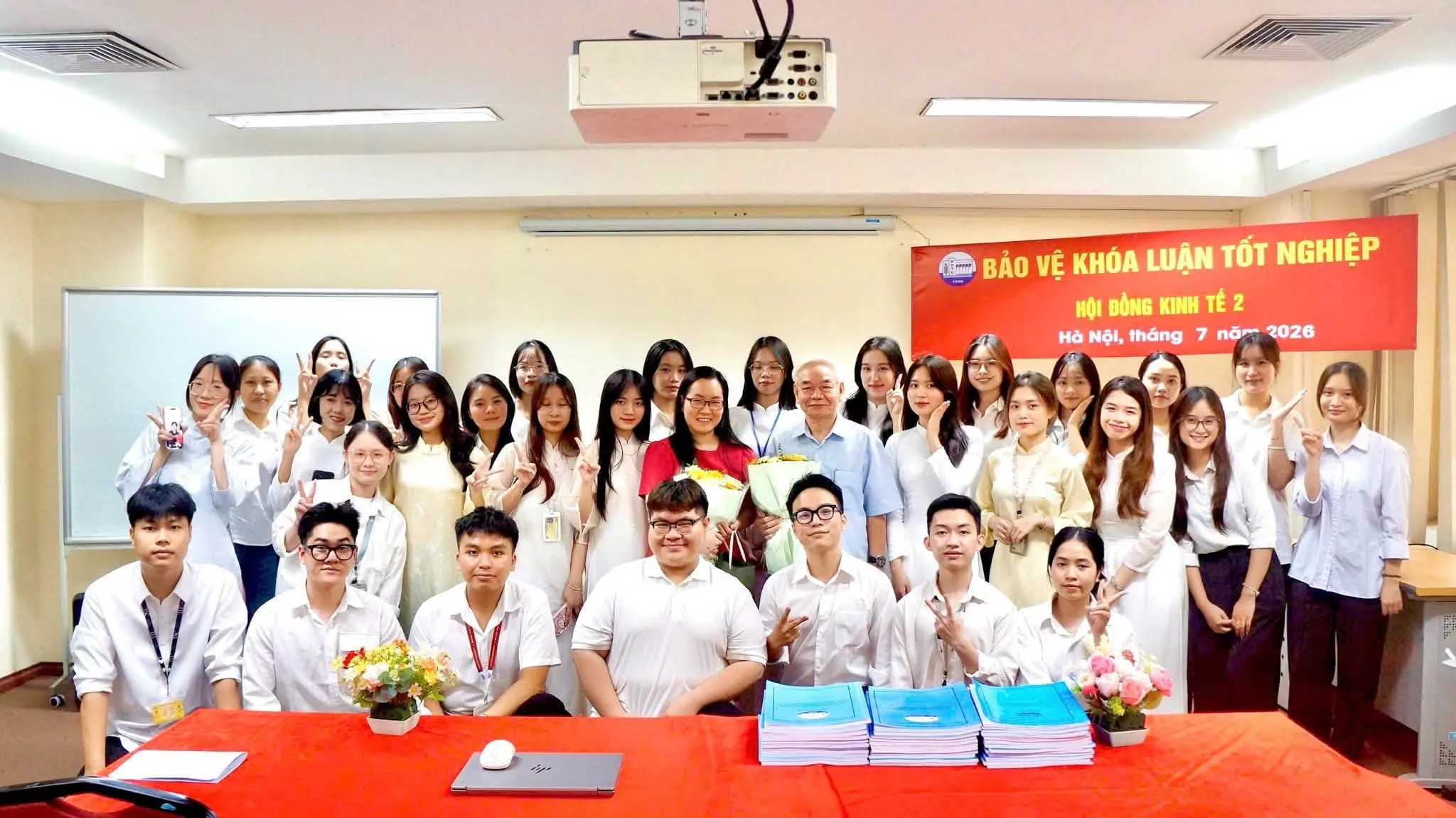
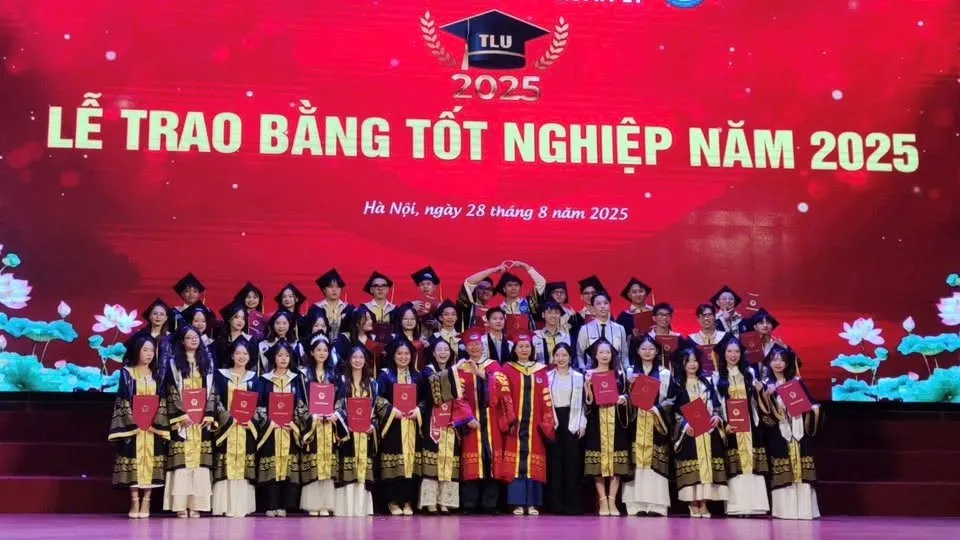
    • Graduate learners in a seminar, policy case discussion or group project on economic management.
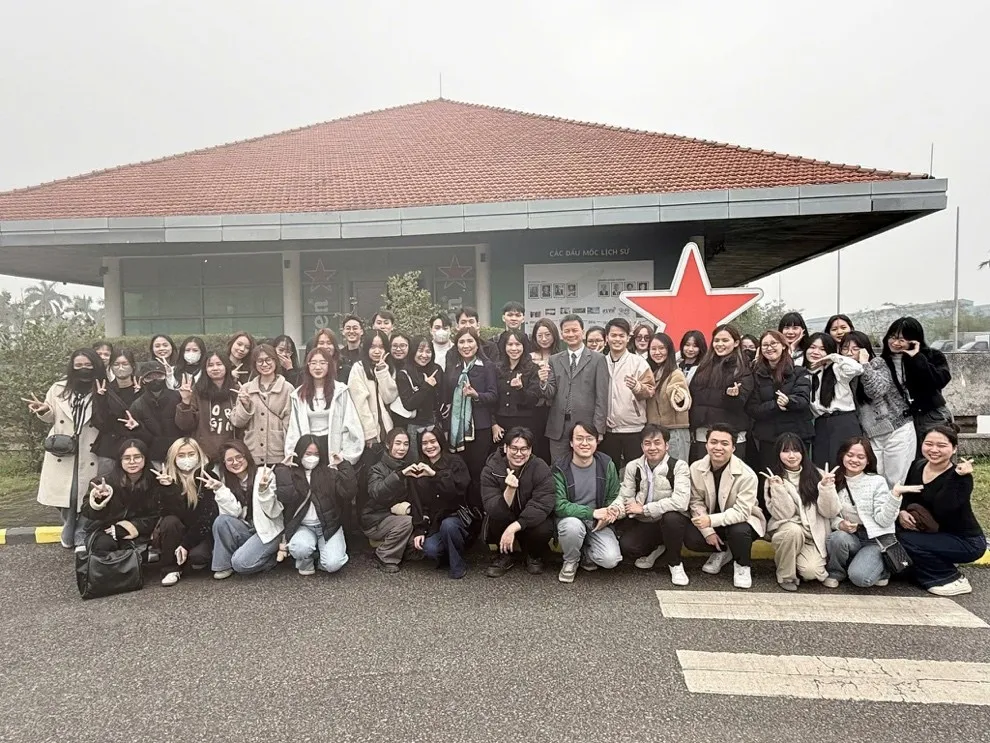
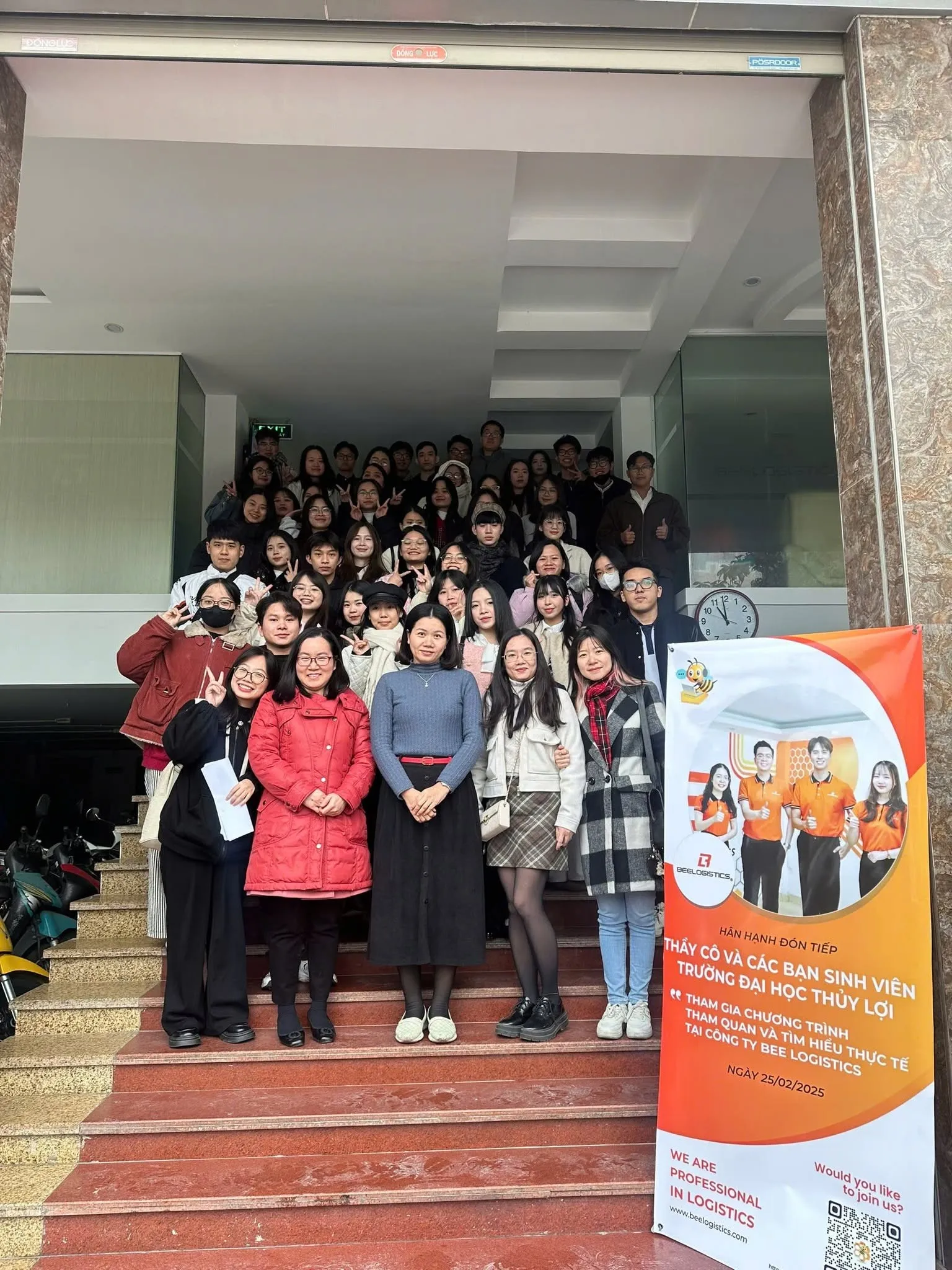
    • Field visits or applied learning with public agencies, enterprises or development projects.
    • Research seminar, graduation project defence or faculty–student scholarly activity.

    Video

    Faculty of Economics and Management introduction video (2026): https://www.youtube.com/watch?v=KZMnY4NWJSU

    Contact

    Faculty Faculty of Economics and Management, Thuyloi University
    Location Room 211, Building A5, Thuyloi University, 175 Tay Son Street, Kim Lien Ward, Hanoi, Vietnam
    Academic contact Assoc. Prof. Dr. Le Van Chinh
    Email [email protected]
    Faculty email [email protected]
    Website https://fem.tlu.edu.vn/


  • Logistics and Supply Chain Management

    Logistics and Supply Chain Management

    Head of the Department of E-commerce: Prof. Dr. Dang Dinh Dao

    Overview: The Logistics and Supply Chain Management programme at Thuyloi University integrates knowledge of economics, management, and technology to develop highly qualified professionals in logistics and supply chain management. Throughout the programme, students acquire specialized knowledge and practical skills in logistics management, international freight transportation and forwarding, warehouse management, import–export operations, and supply chain management. The curriculum emphasizes the integration of theoretical knowledge and practical experience through experiential learning, industry internships, and engagement with industry experts. The programme prepares graduates for diverse career opportunities in logistics, import–export, manufacturing, and trading enterprises, as well as multinational corporations.

    Undergraduate Programs:

    • Introduction: The Logistics and Supply Chain Management programme integrates economics, management, and technology with industry practices, equipping students with professional competencies to meet the evolving demands of global supply chains, digital transformation, and sustainable development.
    • Highlights:
      • Highly qualified faculty members educated at prestigious universities in Vietnam and abroad.
      • Integration of theoretical knowledge and practical experience through case studies, real-world projects, experiential learning activities, and industry internships.
      • Regular seminars, expert-led discussions, and industry engagement activities, providing students with practical insights and opportunities to expand their career prospects.
      • Modern facilities, well-equipped classrooms, and learning resources in central Hanoi, supporting students’ academic and research activities.
      • Practice-oriented courses, including Logistics Management, Supply Chain Management, International Freight Transportation and Forwarding Operations, Warehousing and Packaging in Logistics, Import–Export Operations, and Green Logistics and Supply Chains..
    • Credits: 130
    • Duration: 4 years

    Objective: The Logistics and Supply Chain Management programme aims to develop graduates with a solid foundation in economics, management, and technology, alongside the competencies to organize, manage, and optimize logistics and supply chain operations. It fosters professional skills, innovative thinking, and adaptability in international business environments, while emphasizing professional ethics and social responsibility.

    Career Prospects: Graduates of the Logistics and Supply Chain Management programme can pursue career opportunities in the following positions:

    • Logistics and Supply Chain Management Specialists in manufacturing, trading, and service enterprises.
    • Import–Export, International Freight Forwarding, and Customs Clearance Specialists.
    • Transport Coordinators, Warehouse Managers, and Distribution Specialists.
    • Procurement, Order Management, and Supplier Management Specialists.
    • Logistics and Supply Chain Data Analysts and Optimization Specialists.
    • Logistics Consultants and Solution Development Specialists.
    • Management Professionals in logistics companies, import–export enterprises, and multinational corporations.
    • Researchers and Lecturers at universities, research institutes, and government agencies.
    • Professors: Prof. Dr. Dang Dinh Dao (Head of Department) and Dr. Do Thanh Thu (Deputy Head)

    Syllabus:

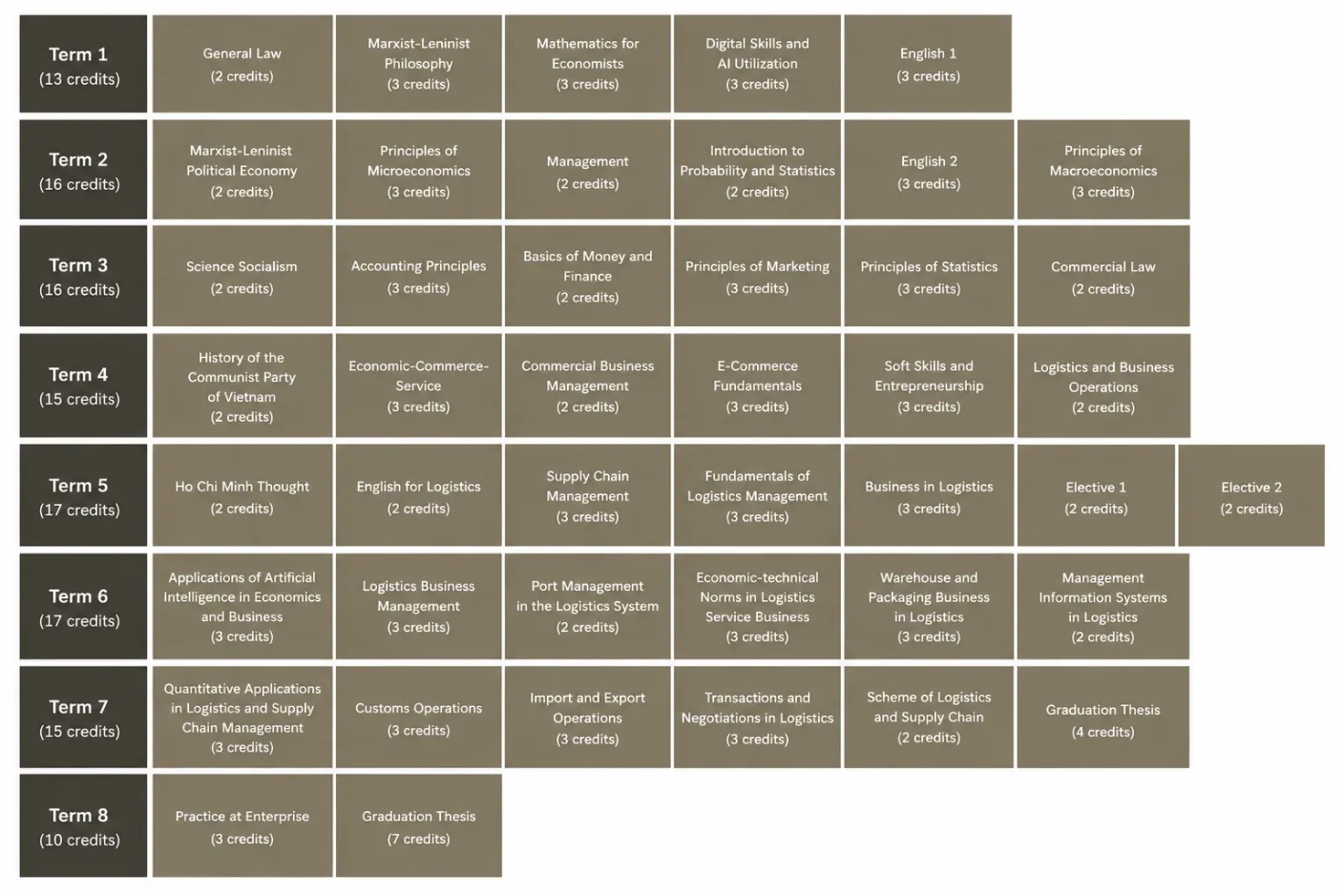
    Logistics and Supply Chain Management

    Activities:

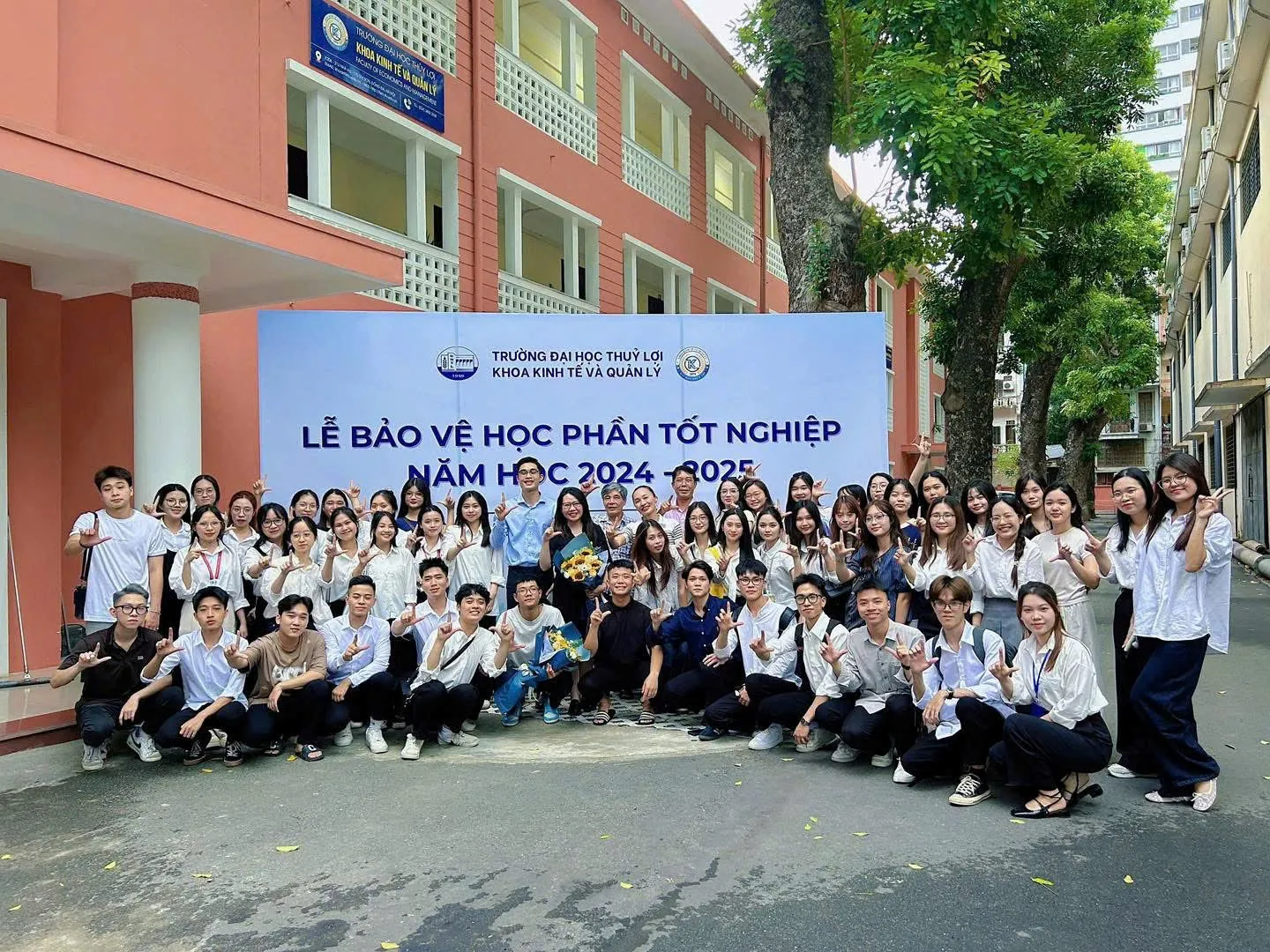
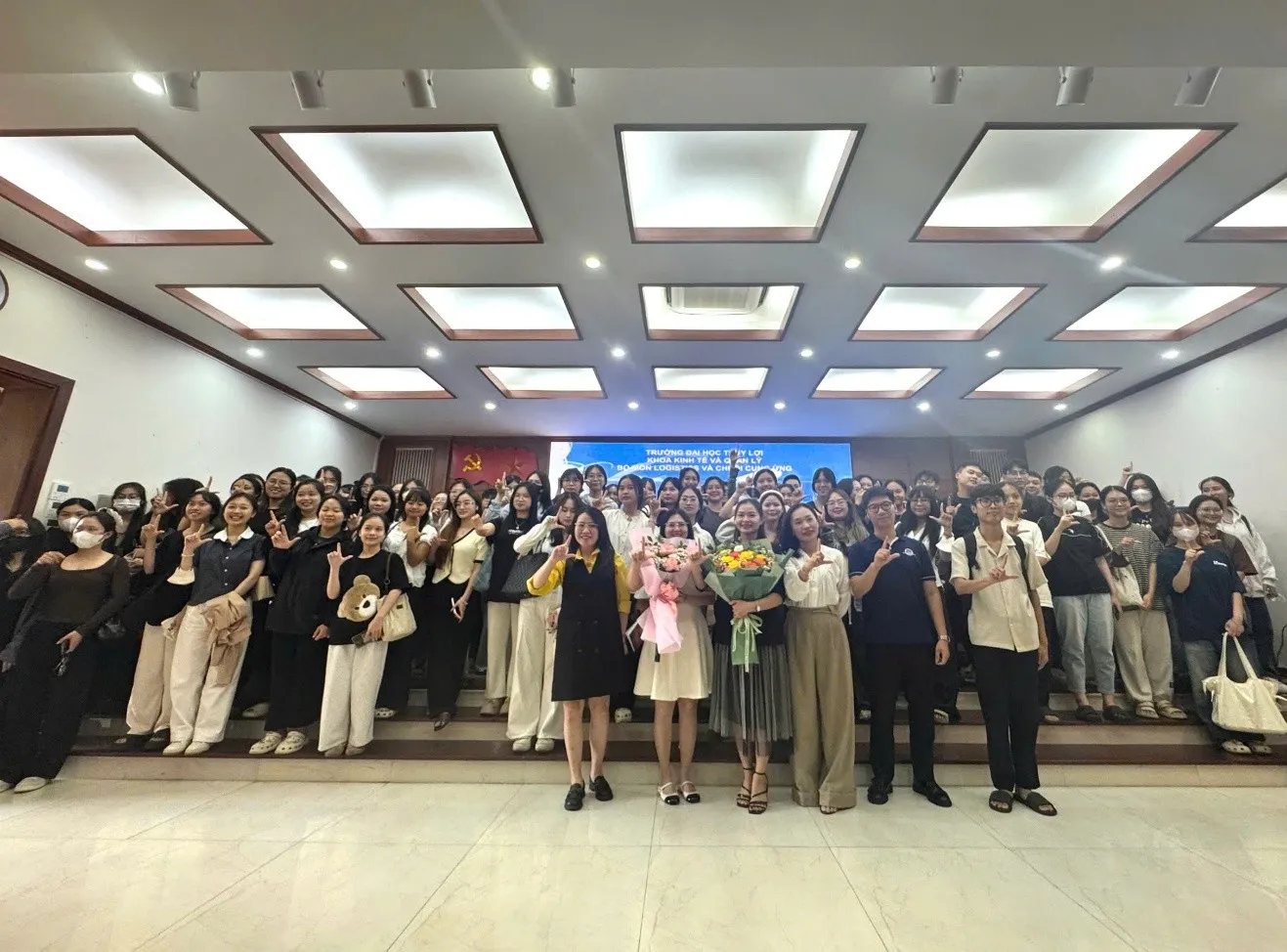
    Logistics and Supply Chain Management Logistics and Supply Chain Management Logistics and Supply Chain Management Logistics and Supply Chain Management Logistics and Supply Chain Management Logistics and Supply Chain Management Logistics and Supply Chain Management Logistics and Supply Chain Management Logistics and Supply Chain Management

    Contact:

    Website: fem.tlu.edu.vn

    Fanpage: https://fem.tlu.edu.vn/bm-logistics-va-chuoi-cung-ung

    Department office: Room 203, Building A5, Thuyloi University, 175 Tay Son, Kim Lien Ward, Hanoi

    Phone / Email: (024) 3852 2028 (Faculty hotline); [email protected].

    Direct contact: Dr. Do Thanh Thu, 0904 475 413, [email protected]

  • Economics

    Economics

    TRAINING PROGRAMS: ECONOMICS – UNDERGRADUATE PROGRAMS

    Introduction

    Economics.  The Bachelor’s Degree Program in Economics (Major Code: 7310101) at Thuyloi University is designed to train high-quality human resources equipped with strong political integrity, professional ethics, and a solid foundation in economics, law, and technology. The program focuses on fostering economic thinking, qualitative and quantitative analytical skills, and the application of artificial intelligence (AI). Students are prepared to meet socio-economic development demands in the context of international integration and the Fourth Industrial Revolution, with four specialized fields, including Natural Resources Economics, Development Economics, International Economics, and Investment Economics.

    Highlights

    ▸  Modern Curriculum & Cutting-Edge Technologies.  Integrates modern technological tools, data analytics models, and Artificial Intelligence (AI) applications directly into economic and business modules.

    ▸  Diverse Specialization Fields.  Offers four specialized fields to cater to different career paths: Natural Resources Economics, Development Economics, International Economics, and Investment Economics.

    ▸  Practical & Learner-Centric Teaching Methods.  Employs active learning strategies such as project-based learning, problem-based learning, case studies, flipped classrooms, and direct engagement with industry experts and corporate guest lecturers.

    ▸  Comprehensive Skill Development.  Strongly emphasizes critical thinking, systemic mindset, teamwork, communication, and startup/innovation competencies.

    Credits & Duration

    CREDITS

    Total Credits: 130 credits (excluding physical education and national defense education certificates).

    •  General Education: 30 credits

    •  Professional Education: 100 credits (Compulsory: 83 credits, Elective: 17 credits)

    DURATION

    Standard Duration: 4 years (divided into 8 main semesters, plus parallel and summer semesters supporting early graduation or credit acceleration).


    Objective

    General Objective.  To develop qualified professionals with sound ethics, autonomy, and social responsibility; equipped with foundational and specialized economic knowledge to solve practical socio-economic problems in the era of the Fourth Industrial Revolution.

    Specific Objectives:

    1. Equip fundamental knowledge in political theory, law, and economic science to foster critical thinking and analytical capabilities.
    2. Develop profound expertise in economics and specialized domains to handle complex management and business challenges.
    3. Build essential professional skills (communication, teamwork, IT proficiency, foreign languages, qualitative/quantitative data analysis).
    4. Instill professional ethics, civic awareness, self-study capacity, and innovation spirit.
    5. Enable graduates to take on professional, managerial, research, or consulting positions or successfully pursue entrepreneurial ventures.

    Career Prospects

    Graduates of the Economics program can flexibly adapt to dynamic job markets and assume professional, managerial, consulting, or research roles across various sectors:

    ▸  Natural Resources Economics.  Specialists in resource and environmental economics, sustainable development, climate change adaptation, ecological economics, natural resource valuation, and coastal/water resource management.

    ▸  Development Economics.  Planners, analysts, and project managers in public economics, regional development policies, socio-economic development programs, and public finance.

    ▸  International Economics.  Professionals in international trade, import-export operations, global logistics, international credit and payments, multinational enterprises, and cross-border business strategies.

    ▸  Investment Economics.  Investment analysts, project planners and appraisers, capital market specialists, risk management personnel, and investment promotion experts for domestic and international corporations.

    Academic staff

    The program is instructed by a highly qualified, dedicated faculty of experienced professors, lecturers, and leading industry experts who apply modern student-centered teaching methodologies, guide practical projects, and foster innovative startup mindsets among students.


    NAME TEACHING AND RESEARCH AREAS
    Dr. Phung Mai Lan     Economics; International Economics; Environmental Economics, Green growth and sustainability, Development Economics; Economic Policy, Trade, FDI, and firm productivity and efficiency, Managerial Economics
    Assoc. Prof. Dr. Truong Duc Toan   Economics and public policy in a market economy, Environmental economics and policy, Investment and development economics, Public service management and delivery, Efficient management and utilization of natural resources and the environment
    Assoc. Prof. Dr. Tran Van Hoe International Economics, Risk Management, Policy Analysis and Evaluation
    Dr. Le Phuong Thao Development Economics, economics and public policy, green growth and sustainability, Managerial Economics, resource allocation
    Dr. Nguyen Anh Tuyet Economics, Managerial Economics, Development Economics, firm productivity and efficiency, policy analysis, state budget
    Dr. Nguyen Thi Thanh Huyen  Economics, Green growth and sustainability, Development Economics, Trade and exports Managerial Economics
    Dr. Phan Thuy Thao  Investment Economics, international investment, FDI, Project management, procurement and bidding, investment project appraisal, Development Economics; Economic Policy, Economic management, state management of investment, public financial management, Digital transformation, sustainable development, green economy, Capital markets
    MSc. Nguyen Thuy Trang International Economics, FDI, economic growth, green economy, Environmental Economics
    MSc. Tran Khac Ninh Investment Economics, securities, FDI
    MSc. Lam Thi Thuy Linh Investment Economics, securities, FDI, investment capital, firm efficiency, digital transformation
    MSc. Truong Thi Tieu Le International Economics, global supply chains, green economy
    MSc. Phan Thuy Tam Business Administration, Development Economics
    MSc. Tran Thi Ngoc Tu Investment Economics, securities, FDI, employment, economic growth
    MSc. Mai Huong Giang Investment Economics, securities, FDI


    CURRICULUM – SEMESTER-BY-SEMESTER SYLLABUS

    (*): Required courses   (★ marks elective courses)

    Common Core Curriculum (all specializations) – Semesters 1–7

    HK1

    (16 TC)

    General Law

    GEL111 | 2 TC
    Marxist-Leninist Philosophy

    MLP121 | 3 TC
    Mathematics for Economists

    MAEC112 | 3 TC

    Principles of Microeconomics

    ECON102 | 3 TC

    Management

    BACU101 | 2 TC

    Economic Thinking and Career Orientation in Economics

    TCOE101 | 3 TC

       
    HK2

    (17 TC)

    Soft Skills and Entrepreneurship

    SSE111 | 3 TC

    Introduction to Probability and Statistics

    MATH253 | 2 TC

    Digital Skills and AI Utilization

    CSE105 | 3 TC

    Principles of Macroeconomics

    ECON103 | 3 TC

    Accounting Principles

    ACC102 | 3 TC

    International Economics

    INEC213 | 3 TC

       
    HK3

    (17 TC)

    Marxist-Leninist Political Economy

    MLPE222 | 2 TC

    English 1

    ENG213 | 3 TC

    Basics of Money and Finance

    ACC101 | 2 TC

    Principles of Statistics

    BACU203 | 3 TC

    Commercial Law

    CLAW204 | 2 TC

    Econometrics

    ECON207 | 2 TC

    Development Economics

    DEEC314 | 3 TC

     
    HK4

    (17 TC)

    Science Socialism

    SCSO232 | 2 TC

    English 2

    ENG224 | 3 TC

    Principles of Marketing

    BACU102 | 3 TC

    Applied Informatics in Economics

    AIEC427 | 3 TC

    Application of Artificial Intelligence in Economics and Business

    AIEB325 | 3 TC

    Investment Economics 1

    INVE315 | 3 TC

       
    HK5

    (20 TC)

    Cost-Benefit Analysis

    CBA213 | 3 TC

    English for Economics

    EECO316 | 3 TC

    State Management in Economy

    SMIE212 | 2 TC

    Economic Managment

    EM212 | 2 TC

    Human Resources Economics

    HRE214 | 2 TC

    Environmental Econonomics

    EEC220 | 2 TC

    Construction Economics 1

    CECON316 | 2 TC

    Business – Economic Strategy and Policy

    BESP322 | 2 TC

    Design Thinking, Creativity and Innovation

    DTCI375 | 2 TC

         
    HK6

    (14 TC)

    History of the Communist Party of Vietnam

    HCPV343 | 2 TC

    Fourth Industrial Revolution

    FIR210 | 3 TC

    Data Analysis in Economics

    DAE265 | 3 TC

    Fundamentals of Tourism Economy

    FOTE423 | 2 TC

    Introduction to Natural Resources Economics

    INRE317 | 2 TC

    Technology Transfer and Management

    TIM318 | 2 TC

       
    HK7

    (4 TC)

    Ho Chi Minh Thought

    HCMT354 | 2 TC

    Economic Analysis and Forecasting

    EAF221 | 2 TC


    Specialization: Natural Resources Economics – Semesters 5–8

    HK5

    (6 TC)

    Sustainable Development Economic

    SDE325 | 3 TC

    Economics of Climate Change

    ECC326 | 3 TC

       
    HK6

    (12 TC)

    Ecological Economics

    EE417 | 3 TC

    Natural Resources Economics

    NRE316 | 3 TC

    Coastal and Marine Economics  ★

    CME332 | 3 TC

    Socio – economic Development Planning  ★

    SEDP326 | 3 TC

    HK7

    (18 TC)

    Scheme on Natural Resources Economics

    SNRE316 | 3 TC

    Valuation of Environment and Natural Resources

    VENR417 | 3 TC

    Forestry Economy  ★

    FOEC333 | 3 TC

    Water Resources Economics  ★

    WRE316 | 3 TC

    Investment Project Management  ★

    IPM417 | 3 TC

    Development Project Program  ★

    DPP449 | 3 TC

       
    HK8

    (10 TC)

    Graduate Intership in Natural Resources Economics

    INTE461 | 3 TC

    Graduate Thesis

    GRTH401 | 7 TC


    Specialization: International Economics – Semesters 5–8

    HK5

    (9 TC)

    Export – Import Practice

    EIPR336 | 3 TC

    Financial Investment Analysis  ★

    FIA369 | 3 TC

    International Investment  ★

    INT468 | 3 TC

     
    HK6

    (12 TC)

    Integration and International Institutions

    INTI334 | 3 TC

    Logistics

    LOG417 | 3 TC

    Data Management in International Economics  ★

    DMIE367 | 3 TC

    Multilateral Trade  ★

    MTA417 | 3 TC

    HK7

    (18 TC)

    The World Market and International Trade Bussiness

    MITB335 | 3 TC

    Scheme on International Economics

    SCIN316 | 3 TC

    International Credit and Payment

    ICP426 | 3 TC

    International Negotiations  ★

    INN341 | 3 TC

    Multinational Enterprises and Global Business Strategies  ★

    MEGB417 | 3 TC

    Corporate Finance  ★

    ACC427 | 3 TC

       
    HK8

    (10 TC)

    Graduate Intership in International Economics

    GIIE462 | 3 TC

    Graduate Thesis

    GRTH401 | 7 TC


    Specialization: Development Economics – Semesters 5–8

    HK5

    (9 TC)

    Public Economics

    PUEC343 | 3 TC

    Finacial Investment Analysis  ★

    FIA369 | 3 TC

    International Investment  ★

    INT468 | 3 TC

     
    HK6

    (10 TC)

    Economics and Public Finance

    PE417 | 3 TC

    Socio – Economic Development Planning

    SEDP326 | 3 TC

    Feasibility Study and Appraisal of Investment Projects  ★

    ECON428 | 2 TC

    Models of Growth and Development  ★

    MGD351 | 2 TC

    HK7

    (19 TC)

    Applied Development Economics

    ADE344 | 2 TC

    Development Project Program

    DPP449 | 3 TC

    Scheme on Developmental Economics

    SDE326 | 3 TC

    Economics and Policies of Regional Developemnt

    EPDP345 | 2 TC

    Quantitative Application in Economic Analysis  ★

    QAEA316 | 3 TC

    Investment Project  Management  ★

    IPM417 | 3 TC

    Corporate Finance  ★

    ACC427 | 3 TC

     
    HK8

    (10 TC)

    Graduate  Intership in Development Economics

    GIDE463 | 3 TC

    Graduate Thesis

    GRTH401 | 7 TC


    Specialization: Investment Economics – Semesters 5–8

    HK5

    (9 TC)

    Finacial Investment Analysis

    FIA369 | 3 TC

    Analysis and Decision-Making in Investment  ★

    ADMI360 | 3 TC

    International Investment  ★

    INT468 | 3 TC

     
    HK6

    (7 TC)

    Feasibility Study and Appraisal of Investment Projects

    ECON428 | 2 TC

    Investment Economics 2

    INVE353 | 2 TC

    Capital Market

    CAMA315 | 3 TC

     
    HK7

    (22 TC)

    International Tender

    INTE417 | 3 TC

    Investment Project  Management

    IPM417 | 3 TC

    Scheme on Investment Economics

    SIEC316 | 3 TC

    Risk Management in Investment  ★

    RMIN417 | 3 TC

    Development Project Program  ★

    DPP449 | 3 TC

    Corporate Finance  ★

    ACC427 | 3 TC

    Investment Promotion  ★

    INPR355 | 2 TC

    Economics and Policies of Regional Developemnt  ★

    EPDP345 | 2 TC

    HK8

    (10 TC)

    Graduate Intership in Investment Economics

    GIIE364 | 3 TC

    Graduate Thesis

    GRTH401 | 7 TC


    PHOTOGRAPHS

    Economics Economics Economics Economics Economics Economics Economics Economics Economics Economics Economics Economics Economics Economics

    VIDEO

    ▸  https://www.facebook.com/watch/?v=1786043661577448

    CONTACT

    ✉  Faculty of Economics and Management Office: Room 206–207, Building A5, Thuyloi University, 175 Tay Son, Kim Lien Ward, Hanoi. Tel: (024) 3852 2028. Email: [email protected]

    ✉  Department of Economics Office: Room 210, Building A5.

    ✉  Dr. Phung Mai Lan – Vice Dean of the Faculty; in charge of the Department of Economics. Email: [email protected]

    ✉  Assoc. Prof. Dr. Truong Duc Toan – Vice Head, Department of Economics. Email: [email protected]

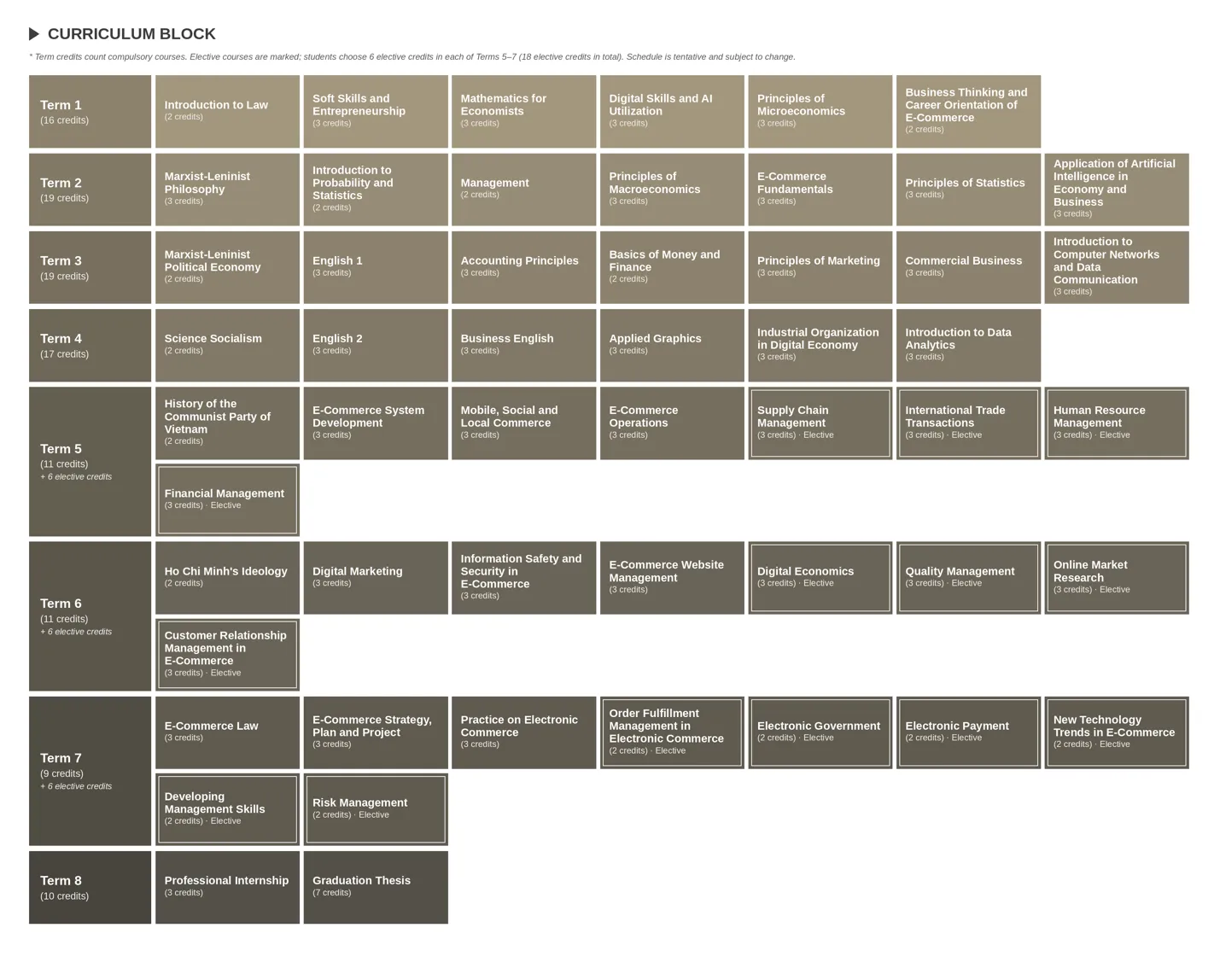
  • E-commerce

    E-commerce

    Head of the Department of E-commerce: Assoc. Prof. Dr. Nguyen Van Minh

    Overview: The E-commerce major at Thuyloi University is an interdisciplinary program that combines economics, technology and digital business management to prepare professional, creative, and ethical e-commerce professionals. Over 4 years and 130 credits, students learn through a combination of theory and practice, including real projects, internships and industry talks, in fields such as digital marketing, data analytics, e-logistics and e-marketplace management. Graduates can pursue careers in e-commerce, digital marketing, logistics, and digital transformation.

    Undergraduate Programs:

    • Introduction: The program is built on successful e-commerce curricula in Vietnam and internationally. It prepares students for the digital economy in the context of globalization.
    • Highlights:
      • Lecturers have been trained at renowned universities in Vietnam and abroad, including Sweden, Australia and South Korea.
      • Theory is integrated with hands-on learning through real-world projects, internships and extracurricular activities, so students build job-ready skills from the early years of the program.
      • Regular workshops, expert talks and internship programs give students early exposure to the professional environments.
      • Located in central Hanoi, with well-equipped classrooms and practice laboratories that support learning and research.
      • Applied modules in digital marketing, data analytics, e-logistics, e-commerce system development, e-marketplace management and online advertising.
    • Credits: 130
    • Duration: 4 years

    Objective: The E-commerce program prepares digital business professionals who combine economic insight, technological fluency and managerial skill. Students learn to develop and manage online businesses, translate data into actionable insights, and create value across digital platforms and markets. They graduate ready for the workplace and adaptable to a fast-changing digital economy. Guided by strong ethics and social responsibility, they are prepared to work and grow in international environments.

    • Career Prospects: Graduates can build careers as:
      • E-marketplace and e-commerce operations specialists, managing online stores and platforms such as Shopee, TikTok Shop and Lazada.
      • Digital marketing specialists, managing online campaigns, digital advertising, and customer engagement.
      • Data and business analysts, using customer and sales data to optimize online performance.
      • Digital business and e-commerce system managers, overseeing e-commerce systems, e-logistics and digital transformation projects.
      • E-commerce consultants and solution developers at consulting and IT firms.
      • Researchers and lecturers at universities, research institutes and government agencies.
    • Professors: Assoc. Prof. Dr. Nguyen Van Minh (Head of Department) and Dr. Bui Thi Thu Hoa (Deputy Head)

    Syllabus:

    E-commerce

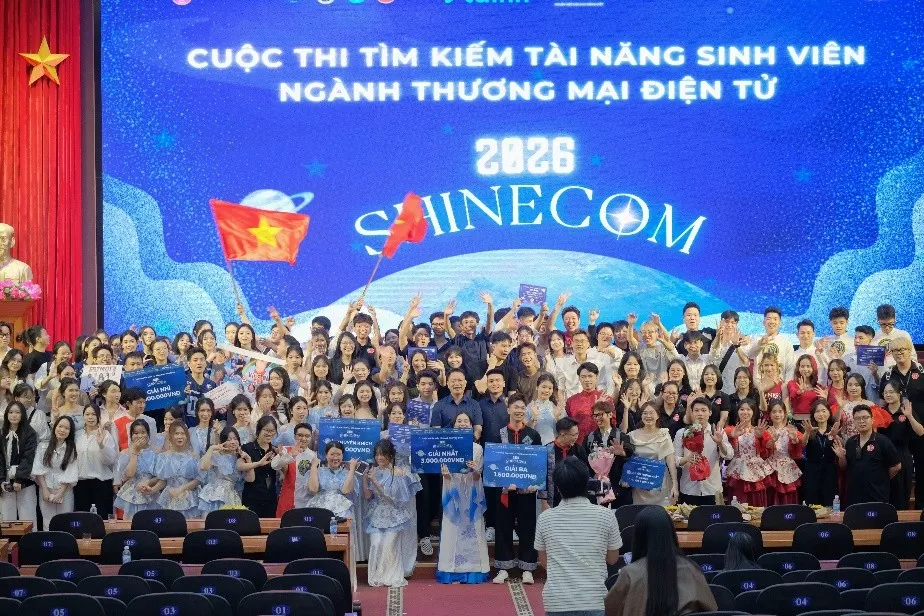
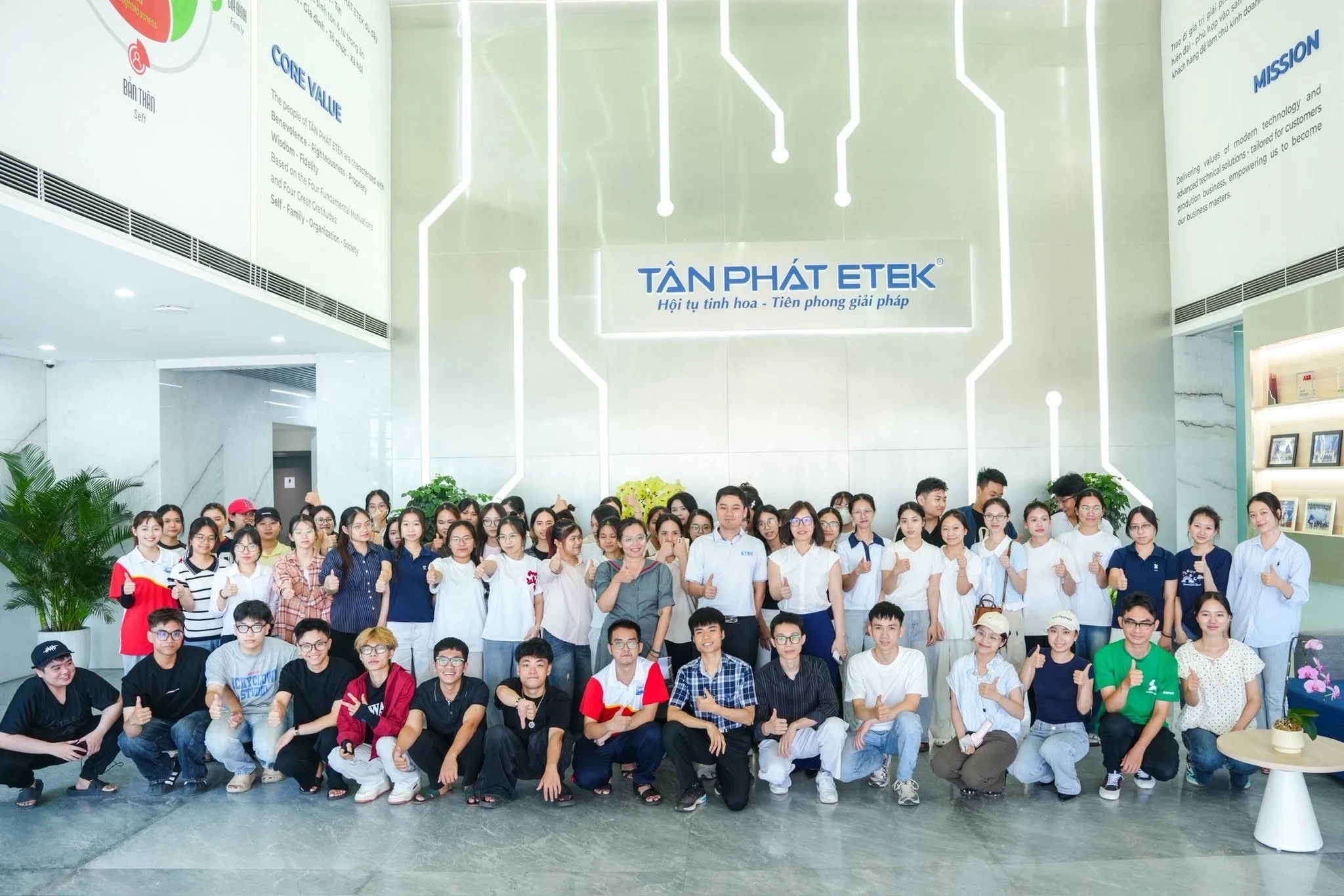
    Acticities:

    E-commerce E-commerce

    Contact:

    Website: fem.tlu.edu.vn

    Fanpage: https://www.facebook.com/thuongmaidientu.tlu

    Department office: Room 208, Building A5, Thuyloi University, 175 Tay Son, Kim Lien Ward, Hanoi

    Phone / Email: (024) 3852 2028 (Faculty hotline); [email protected].

    Direct contact: Dr. Bui Thi Thu Hoa, 0983 278 799, [email protected]

  • Doctoral Program in Economic Management

    Degree Doctor of Philosophy (PhD) in Economic Management
    Program code 9310110
    Level Level 8, Vietnamese Qualifications Framework
    Mode and duration Full-time; 3 years for master’s degree holders and 4 years for bachelor’s degree holders (maximum 6 years)


    Overview: The Faculty of Economics and Management provides education and research in economics, management and related applied disciplines. Its graduate programs emphasize analytical thinking, evidence-based decision-making and the application of economic and managerial knowledge to real-world development and infrastructure challenges. The Faculty promotes interdisciplinary learning, professional engagement and research-oriented development for learners at advanced levels.

    Introduction

    The Doctoral Program in Economic Management at Thuyloi University trains independent researchers and experts capable of generating new knowledge and leading professional practice in economic management. Doctoral candidates deepen their command of advanced economic and management theories and modern research methods, and conduct original research on issues such as public policy, state management of the economy, investment and development, natural resource and environmental management, and enterprise performance. The program combines doctoral-level courses, a literature review essay, three doctoral research topics, peer-reviewed publications and a doctoral dissertation.

    Highlights

    • Research-intensive program leading to a PhD at Level 8 of the Vietnamese Qualifications Framework.
    • Flexible entry routes for master’s graduates in the same or related fields and for bachelor’s graduates with high academic achievement.
    • A choice of 12 doctoral-level courses in public management and leadership, policy analysis, governance and development, globalization, quantitative methods and critical thinking.
    • Structured research milestones: a literature review essay, three doctoral research topics, at least two peer-reviewed publications and a 70-credit dissertation.
    • Supervision by a large team of professors and doctoral-level staff with active research in policy analysis, resource and development economics, investment, finance and quantitative economics.

    Objectives

    The program develops graduates who possess in-depth knowledge of economic management, including advanced theory and practical insight; who can identify and solve new problems in the field creatively; who can conduct high-level research and teach at undergraduate and graduate levels; and who can set their own direction and provide expert professional leadership. Specifically, graduates are able to:

    • demonstrate in-depth knowledge of economic management, management science and the governance of the macro- and microeconomy, including forecasting, analysis, planning and policy critique;
    • apply scientific thinking, modern research methods and critical reasoning to interpret advanced knowledge of economic management;
    • identify and address emerging issues in economic management and conduct or manage national and international research projects independently;
    • apply knowledge, methodologies and scientific thinking effectively to policy-making and to the formulation and implementation of management decisions in organizations and enterprises; and
    • generate ideas, provide professional leadership and make expert judgments and decisions in economic management.

    Expected learning outcomes

    Knowledge

    • In-depth, advanced and comprehensive knowledge of economic management.
    • Core, foundational and advanced knowledge of economics and globalization for synthesizing, analyzing and interpreting economic policies and management activities.
    • Mastery of core academic values and research in the development of principles and theories of economic management, and the ability to apply them in implementing, reviewing, evaluating and critiquing state economic policies.
    • Specialized knowledge for managing, leading and organizing the formulation and appraisal of development strategies and plans of socio-economic organizations, and for implementing and evaluating economic management at all levels.

    Skills

    • Mastery of the principles and theories of economic management and of research methods and tools for research and development in the field.
    • Independent and creative research thinking; systems-based synthesis, analysis and argumentation; the ability to create new knowledge in economic management.
    • The ability to identify and analyze complex problems in economic management and to propose creative solutions in the context of international integration and global competition.
    • The capacity to manage and direct professional work in research, planning and critique of economic management strategies, policies and decisions, and to apply theory to their formulation and implementation.
    • The ability to mobilize collective expertise, lead professional work at different levels and participate in national and international professional networks.

    Autonomy and responsibility

    • The capacity to conduct research that develops new knowledge in economic management.
    • The ability to generate new ideas and knowledge in economic management in complex and varied contexts.
    • The ability to orient, lead and guide research teams in economic management.
    • The ability to provide independent critique and make professional judgments and decisions as an expert in economic management.
    • The ability to manage research projects and a strong commitment to lifelong learning, professional development and the creation of new ideas and processes in economic management.

    Career prospects

    Graduates are prepared for positions as researchers and lecturers in universities and research institutes; senior policy advisers and managers in state management agencies; leaders and experts in enterprises, financial institutions and development organizations; and independent consultants in policy analysis, development planning and investment management.

    Admission

    Eligible fields of study

    Field of prior study Classification
    Economic management Same field
    Economics, political economy, investment economics, development economics, international economics, economic statistics, mathematical economics, management science, public policy, public management Related field (economics and management group)
    Information management, business administration, commerce, finance and banking, insurance, accounting, auditing, human resource management, management information systems, office administration, industrial management and economics, logistics and supply chain management, construction economics, construction management, agribusiness, agricultural economics, rural development, forest and fisheries resource management, natural resource and environmental management, natural resource economics, land management Related field (business, management, administration and sectoral economics group)

    Other fields may be considered by the Faculty Council.

    Admission requirements

    Admission is by application review. Applicants must:

    • hold a master’s degree, or a bachelor’s degree with a classification of “very good” or higher, in a same or related field, or an equivalent Level 7 qualification in a relevant specialized field;
    • meet the entry requirements set by the Ministry of Education and Training and by the program;
    • have research experience demonstrated by a research-oriented master’s thesis, published scientific papers or reports, or at least two years of work as a lecturer or researcher;
    • submit a draft research proposal and a study and research plan for the entire program; and
    • meet the foreign language requirements of the Thuyloi University Regulations on Doctoral Admission and Training (Decision No. 489/QD-DHTL dated 19 April 2022). International applicants studying in Vietnamese must hold at least Level 4 on the Vietnamese Language Proficiency Framework for Foreigners and be able to read and communicate professionally in English.

    Curriculum structure

    Component Credits Requirement
    Supplementary courses (depending on prior degree) 0–8 See below
    Doctoral-level courses 4 2 of 12 courses
    Literature review essay 2 Compulsory
    Three doctoral research topics 6 Compulsory
    Scientific publications (at least two) 10 Compulsory
    Doctoral dissertation 70 Compulsory


    Entry route Total credits
    Master’s degree in the same field 92
    Master’s degree in a related field (economics and management group) 96
    Bachelor’s degree with a “very good” classification or higher in a relevant field 135

    Supplementary and bridging courses

    • Master’s graduates in the same field: no supplementary courses required.
    • Master’s graduates in a related field of the economics and management group: at least 4 credits, selected as two of the six courses below.
    • Master’s graduates in a related field of the business, management, administration and sectoral economics group: at least 8 credits, as determined by the Faculty Council after admission.
    • Bachelor’s graduates: the core courses of the Master’s Program in Economic Management, excluding foreign language and the master’s thesis; supervisors may require additional undergraduate courses where necessary.
    • Supplementary courses must be completed within 12 months of admission; courses completed in a master’s program may be recognized by the Faculty.


    No. Code Supplementary course Credits
    1 ECM508 Advanced Management Science 2
    2 EDE508 Advanced Development Economics 2
    3 ASME526 Advanced State Management of the Economy 2
    4 BADT511 Leading Digital Transformation 2
    5 EAF511 Advanced Economic Analysis and Forecasting 2
    6 BAHM507 Advanced Human Resource Management 2

    Doctoral-level courses (4 credits)

    Doctoral courses update candidates’ knowledge of recent developments in economic management and strengthen their theoretical grounding and command of research methodology. Each course carries 2 credits; candidates select two of the following twelve courses.

    No. Code Doctoral course Credits
    1 SRM701 Scientific Research Methodology 2
    2 PML702 Public Management and Leadership 2
    3 SEPA703 Socio-Economic Policy Analysis 2
    4 RMA704 Risk Management 2
    5 QAM705 Quantitative Applications in Economic Management 2
    6 GAD706 Governance and Development 2
    7 SDP707 Socio-Economic Development Planning 2
    8 GPP708 Globalization and Public Policy 2
    9 MEMT709 Modern Theories of Economic Management 2
    10 CTH710 Critical Thinking 2
    11 PMGC711 Public Management in the Context of Globalization 2
    12 NCM712 Negotiation and Conflict Management 2

    Literature review essay and doctoral research topics (8 credits)

    • Literature review essay (2 credits): a detailed dissertation proposal that reviews and critically evaluates related domestic and international studies, states the dissertation title, research questions, methods, results already achieved and expected outcomes.
    • Three doctoral research topics (6 credits, 2 credits each): studies directly related to the dissertation that update knowledge, strengthen research capacity and address parts of the dissertation, presenting the state of research, methods, results, discussion, conclusions and recommendations.

    Scientific publications (10 credits)

    Candidates must be the principal author of scientific outputs directly related to and contributing significantly to the dissertation, totalling at least 2.0 points under the maximum scores set by the State Council for Professorship (without division of points among co-authors). Eligible outputs include papers in WoS/Scopus-indexed journals or conference proceedings, chapters in reference books from reputable international publishers, papers in Vietnamese journals rated 0.75 points or higher by the Council for Professorship in Economics, and monographs from reputable publishers. Alternatively, the requirement may be met by authorship of a research result that has been granted a national or international patent.

    Doctoral dissertation (70 credits)

    The dissertation must be an original scientific work by the candidate that makes theoretical and practical contributions, or offers valuable new solutions, that advance scientific knowledge in the field and creatively address scientific or socio-economic problems.

    Academic staff and supervisors

    Academic staff eligible to teach and supervise in the program, in accordance with Articles 4 and 5 of Circular No. 18/2021/TT-BGDDT, include:

    Name Research areas
    Prof. Dr. Nguyen Van Dinh Economic management; policy analysis
    Assoc. Prof. Dr. Le Van Chinh Policy impact analysis and evaluation; state management of investment and of the economy; resource economics and management; construction economics
    Assoc. Prof. Dr. Nguyen Thien Dung Resource economics and management; valuation of natural resources; resource and environmental policy analysis; economic and financial analysis of investment projects; circular economy; economics of climate change
    Assoc. Prof. Dr. Tran Van Bao Trade and services economics; logistics and supply chain management
    Assoc. Prof. Dr. Nguyen Van Minh Economic management; digital economy and business
    Assoc. Prof. Dr. Do Van Quang Resource economics and management; construction investment economics; state management of the economy
    Dr. Do Van Chinh Economic efficiency analysis; cost management; enterprise risk management; investment project management
    Dr. Bui Anh Tu Resource economics and management; construction investment economics; agricultural and water resources economics
    Dr. Le Minh Thoa State management of economic sectors; investment project management; cost management; economic efficiency analysis
    Assoc. Prof.Dr. Truong Duc Toan Resource economics and management; public economics and management; investment and construction economics; investment risk management; policy analysis
    Dr. Phung Mai Lan Policy impact evaluation; state management of the economy and technology; firm performance and productivity; resource misallocation; technology and FDI spillovers; economic forecasting
    Dr. Phan Thuy Thao Mobilization and use of domestic and foreign investment (FDI, ODA); state management of investment; public and corporate investment; project management and procurement; economic forecasting
    Dr. Nguyen Phuong Lan Policy impact evaluation; economic forecasting; policies on resources, sustainable development, logistics and trade
    Dr. Nguyen Thi Thanh Huyen Policy impact evaluation; effects of trade agreements; growth and structural change; labour, poverty and inequality; monetary and macroeconomic policy
    Dr. Le Thanh Phuong Firm-level efficiency and productivity; banking; development economics
    Dr. Le Phuong Thao Policy impact evaluation; economic forecasting; growth and structural change; technological change and spillovers
    Dr. Bui Thi Thu Hoa Socio-economic development policy; natural resource, environmental and sustainable development policy
    Dr. To Minh Huong Corporate finance; money and finance; economic management; policy analysis
    Dr. Do Thanh Thu Socio-economic development policy (labour, agriculture, logistics, trade, sustainability); quantitative analysis and forecasting
    Dr. Nguyen Anh Tuyet Inflation, monetary, exchange-rate and macroeconomic policy; macroeconomic forecasting; firm productivity and FDI spillovers
    Dr. Le Thi Tam Corporate finance; money and finance; economic management; policy analysis
    Dr. Hoang Thi Mai Lan Financial reporting; internal control; financial statement auditing
    Dr. Vu Thi Phuong Thao Corporate finance; money and finance
    Dr. Tran Quoc Hung Business administration; securities and stock markets
    Dr. Trieu Dinh Phuong Quality management and public service quality; productivity; employee motivation and commitment; global production networks; supply chain management; digital transformation
    Dr. Truong Thi Thu Huong Economic management; business administration
    Dr. Hoang Thi Thu Hien Economic management; business administration; human resource management
    Dr. Nguyen Thi Oanh Economic management; business administration; human resource management
    Dr. Phung Tuan Anh Digital economy; ICT and firm performance; total factor productivity; sharing and circular economy; sustainable development
    Assoc. Prof. Dr. Dao Thi Huong State management of the economy; supply chain management; business administration; corporate culture; productivity and quality
    Dr. Nguyen Thi Phuong Economic management; business administration; human resource management


    Note: English course titles have been standardized for accuracy and international readability. The official Vietnamese curriculum remains the governing document.

    Suggested website visuals

    • Doctoral candidates presenting at a research seminar or academic conference.
    • Supervisor–candidate meetings, research group discussions or dissertation defence sessions.
    • Field research or policy dialogue with public agencies, enterprises or development partners.

    Video

    Faculty of Economics and Management introduction video (2026): https://www.youtube.com/watch?v=KZMnY4NWJSU

    Contact

    Faculty Faculty of Economics and Management, Thuyloi University
    Location Room 211, Building A5, Thuyloi University, 175 Tay Son Street, Kim Lien Ward, Hanoi, Vietnam
    Academic contact Assoc. Prof. Dr. Le Van Chinh
    Email [email protected]
    Faculty email [email protected]
    Website https://fem.tlu.edu.vn/


  • Digital Economics

    Digital Economics

    I. GENERAL INFORMATION

    Program Name Digital Economics
    Program Code 7340131
    Degree Level Bachelor of Science (B.Sc.)
    Duration 4 years (8 semesters)
    Total Credits 130 credits (excluding National Defense & Physical Education)
    Teaching Language Vietnamese (key modules offered in English)
    Mode of Study Full-time

    II. PROGRAM INTRODUCTION

    The Digital Economics program at Thuyloi University (TLU) is designed to develop high-quality human resources, meeting Vietnam’s growing demand for digital economy professionals in the era of comprehensive digital transformation. Students are equipped with interdisciplinary knowledge spanning economics, business administration, and information technology, with emphasis on applying artificial intelligence, big data analytics, and digital business platforms to real-world enterprise settings.

    III. PROGRAM HIGHLIGHTS

    ✦  Advanced curriculum integrating AI and data analytics throughout all study years

    ✦  Faculty with doctoral degrees and international research experience

    ✦  Strong industry partnerships: paid internships, expert mentoring programs

    ✦  State-of-the-art Digital Economics Lab with professional software and case studies.

    ✦  Student exchange scholarship opportunities with universities across Asia

    ✦  Over 95% graduate employment rate within 6 months of graduation

    IV. PROGRAM OBJECTIVE

    To produce Bachelor graduates in Digital Economics with a solid foundation in economics, business administration, and digital technology; capable of data analysis, digital business model deployment, and adaptive decision-making in rapidly evolving digital markets. The program fosters digital transformation leadership mindset and entrepreneurial spirit.


    V. LEARNING OUTCOMES

    • Apply microeconomics, macroeconomics, and econometrics to analyze digital markets
    • Proficiently use data analytics tools: Python, R, advanced Excel, Power BI, Tableau
    • Design and execute digital marketing strategies: SEO/SEM, social media, e-commerce
    • Evaluate digital business models, e-commerce platforms, and fintech ecosystems
    • Apply AI and Machine Learning to economic forecasting and business decision support
    • English proficiency at Level 3/6 according to the 6-level Foreign Language Proficiency Framework for Vietnam
    • Lead teams and manage digital transformation projects

    VI. CAREER PROSPECTS

    ✦ Policy Analysts and Administrators in State Agencies (Ministry of Planning and Investment, Ministry of Industry and Trade, etc.): Formulating and executing national digital transformation policies.

    ✦ Specialists and Strategic Managers in Enterprises: E-commerce, Digital Marketing, Business Data Analytics, Platform-based Business, Digital Product Management.

    ✦ Digital Business System Planners and Operators at tech enterprises, digital startups, and economic corporations undergoing digital transformation.

    ✦ Digital Transformation Solution Specialists at Innovation Hubs, Startup Incubators, and Digital Transformation Consulting Firms.

    ✦ Lecturers, Researchers, and Digital Economy Consultants at research institutes, universities, and international organizations.

    ✦ Prospective Roles: Fintech Specialist, Digital Content Specialist, Digital Market Analyst, AI Business Advisor, etc.

    VII. CURRICULUM BLOCK — BY SEMESTER

    Total: 130 credits  ·  8 semesters  ·  Full-time program

    Semester 1
    (18 cr.)
    General Law

    GEL111  ·  2 cr.

    Marxist-Leninist Philosophy

    MLP121  ·  3 cr.

    Principles of Microeconomics

    ECON102  ·  3 cr.

    Management

    BACU101  ·  2 cr.

    Accounting Principles

    ACC102  ·  3 cr.

    Principles of Marketing

    BACU102  ·  3 cr.

    Digital Information Management System

    DIMS311  ·  2 cr.

     
    Semester 2
    (17 cr.)
    Marxist-Leninist Political Economy

    MLPE222  ·  2 cr.

    Soft Skills and Entrepreneurship

    COPS111  ·  3 cr.

    Mathematics for Economists

    MAEC112  ·  3 cr.

    Digital Skills and AI Utilization

    CSE105  ·  3 cr.

    Principles of Macroeconomics

    ECON103  ·  3 cr.

    Fundamentals of Digital Economy Programming

    FDEP312  ·  3 cr.

       
    Semesterer 3
    (20 cr.)
    Science Socialism

    SCSO232  ·  2 cr.

    Probability and Statistics

    MATH254  ·  2 cr.

    English 1

    ENG213  ·  3 cr.

    Commercial Law

    CLAW204  ·  2 cr.

    Principles of Statistics

    BACU203  ·  3 cr.

    Introduction to Data Analytics

    INDA224  ·  3 cr.

    Econometrics

    ECON207  ·  2 cr.

    Digital Marketing

    BAMA302  ·  3 cr.

    Semesterer 4
    (19 cr.)
    History of the Communist Party of Vietnam

    HCPV343  ·  2 cr.

    English 2

    ENG224  ·  3 cr.

    Basics of Money and Finance

    ACC101  ·  2 cr.

    Digital Economics

    DEF374  ·  3 cr.

    Applications of AI in Economics and Business

    AIEB325  ·  3 cr.

    Digital Infrastructure

    DIN379  ·  3 cr.

    Data Visualization

    DV321  ·  3 cr.

     
    Semesterer 5
    (10 cr. +

    6 Elective cr.*)

    Ho Chi Minh Thought

    HCMT354  ·  2 cr.

    English for Digital Economics

    ELFD373  ·  3 cr.

    Leadership Mindset for Digital Transformation

    LMDT374  ·  3 cr.

    Design Thinking, Creativity and Innovation

    DTCI375  ·  2 cr.

    Digital Business

    DB319  ·  3 cr.

    Online Market Research*

    ONMR326  ·  3 cr.

    Financial Analysis*

    FIN313  ·  3 cr.

    The World Market and International Trade Business*

    MITB335  ·  3 cr.

    Semesterer 6
    (9 cr. +

    6 Elective cr.*)

    Web Development Fundamentals

    WDF313  ·  3 cr.

    Supervision and Control of Digital Infrastructure

    SCDI317  ·  3 cr.

    Digital Business Models and Strategies

    DBMS371  ·  3 cr.

    Digital Finance*

    DF314  ·  3 cr.

    Digital Human Resource Management*

    DHRM322  ·  3 cr.

    User Interface and User Experience Design*

    UIUX324  ·  3 cr.

    Supply Chain Management*

    LSCU101  ·  3 cr.

    Corporate Finance*

    ACC427  ·  3 cr.

    Semesterer 7
    (9 cr. +

    6 Elective cr.*)

    Digital Business Implementation

    DBI375  ·  3 cr.

    Website Design and Management

    WDM318  ·  3 cr.

    Business Intelligence System

    BIS320  ·  3 cr.

    Digital Content Services*

    DCS374  ·  3 cr.

    Digital Business Operations Management*

    DBOM315  ·  3 cr.

    Quality Management*

    BACU314  ·  3 cr.

    Financial Management*

    ACC103  ·  3 cr.

     
    Semesterer 8
    (10 cr.)
    Professional Internship

    DEPI377  ·  3 cr.

    Graduation Thesis / Equivalent Courses

    DEGT378  ·  7 cr.


    VIII. FACULTY

    Name Position Expertise
    Dr. Phung Tuan Anh Head Business Administration, Digital Economics, Digital Transformation, Strategic Management, Digital Technology…
    Dr. Nguyen Thi Oanh Lecturer Business Administration, Digital Economics, AI Applications in Economics, Entrepreneurship, Innovative Thinking…
    Dr. Phan Nam Thai Lecturer Business Administration, Digital Economics, AI Applications in Economics, Banking and Finance…
    MSc. Tran Dinh Ngoc Lecturer Business Administration, Digital Business Models, AI Applications in Economics, Econometrics…
    MSc. Do Nguyet Minh Lecturer Business Administration, AI Applications in Economics, Data Analytics, Digital Marketing…
    MSc. Tran Thi Phuong Dung Lecturer Business Administration, Digital Economics, AI Applications in Economics, Digital Marketing, Innovative Thinking…
    MSc. Nguyen Thi Kim Thoa Lecturer Business Administration, Real Estate, AI Applications in Economics, Data Analytics, Digital Business Models…

    Photographs:

    expertise / scientific research

    Digital Economics

    Digital Economics

    academic program

    Digital Economics

    professors / students / scientific activities

    Digital Economics

    Digital Economics

    Digital Economics

    Video:

    https://www.youtube.com/watch?v=IOtbcipdQTs&t=6s

    https://youtu.be/VPfrrfN9g7I?si=yoa-qfj9QhMWgC6C

    IX. CONTACT INFORMATION

    🏛️  Department of Digital Economics & Business  –  Faculty of Economics and Management

    🏫  University: Thuyloi University (TLU)

    📍  Address: 202 – A5, 175 Tay Son, Dong Da, Hanoi, Vietnam

    🌐  Website: https://tlu.edu.vn

    📧  Email: [email protected]

    📞  Phone: (024) 3852 2028


  • Commercial Business

    Commercial Business

    Major: Commercial Business (7340121)
    Head of Department: Prof. Dr. Dang Dinh Dao

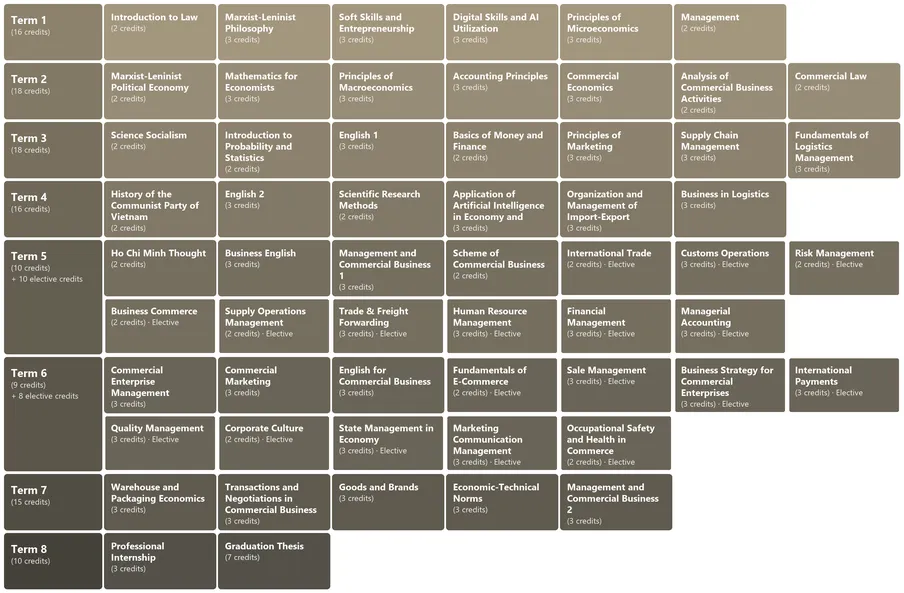
    Overview: The Commercial Business major at Thuyloi University is an advanced, practical, and interdisciplinary program designed to prepare high-quality business, trade, and market management professionals in the era of the digital economy, artificial intelligence, and global economic integration. Over 4 years and 130 credits, students gain comprehensive knowledge and hands-on skills in commercial operations, domestic and international trade, supply chain integration, import-export management, retail and wholesale systems, and digital marketplace strategies. Through a balanced blend of academic rigor, cutting-edge Trade & Logistics simulation laboratories, real-world corporate internships, and interactions with industry leaders, graduates are well-equipped to thrive in commercial enterprises, multinational corporations, logistics service providers, and state trade management agencies.

    Undergraduate Programs:

    • Introduction: The program is benchmarked against top-tier commercial business curricula in Vietnam and leading international universities, tailored to Vietnam’s dynamic domestic market of over 103 million consumers and rapid global trade integration under 17+ Free Trade Agreements (FTAs).
    • Highlights:

    – Distinguished and experienced faculty: Led by renowned professors, associate professors, and Ph.D. scholars with rich teaching and practical consulting expertise, trained at prestigious universities in Vietnam, Germany, Japan, Russia, and Australia.

    – Pioneering practical simulation training: Thuyloi University is one of the pioneer institutions in Vietnam investing in dedicated Trade & Logistics Simulation Laboratories, allowing students to master enterprise operations, warehouse management, and trading procedures right on campus.

    – Forward-looking curriculum integrating AI & Digital Skills: Applied specialized modules including Digital Skills & AI Utilization, Applications of AI in Economy and Business, and E-Commerce equip students with the latest technological competencies for smart commerce.

    – Theory integrated with extensive hands-on experience: Practical projects, field trips, business case competitions, and enterprise internships ensure students develop job-ready, practical capabilities from the early stages of study.

    – Strong government and corporate connections: Active partnerships with state management bodies (Ministry of Industry and Trade, provincial Departments of Industry and Trade) and major industrial, trading, and logistics corporations (Petrolimex, Vinachem, multinational FDI firms) provide rich internship and employment pathways.

    – Prime central Hanoi location: Situated at 175 Tay Son, Dong Da, offering modern air-conditioned classrooms, high-tech computer labs, digital library resources, and dynamic campus life.

    • Credits: 130 credits (excluding Physical Education and National Defense Education)
    • Duration: 4 years (8 regular semesters, with flexible summer terms for accelerated graduation)

    Objective: The Commercial Business program educates high caliber Bachelor of Commerce with solid political qualities, professional ethics, social responsibility, and comprehensive expertise in modern commerce and market management. Students develop sharp analytical acumen, strategic planning abilities, commercial negotiation skills, and proficient use of artificial intelligence, data analytics, and digital technology in business decision-making. Graduates possess effective communication, leadership, and teamwork abilities, international English proficiency (IELTS 5.5-6.0 equivalent), and strong adaptability to succeed in globalized, technology-driven business environments.

    Career Prospects: Graduates can build versatile careers in various sectors, including:

    • Commercial Specialists & Market Development Executives: Managing market research, sales planning, commercial negotiations, customer relations, and business expansion at trading corporations, manufacturing firms, retail and wholesale chains, and FDI enterprises.
    • Import-Export & International Trade Executives: Handling customs clearance, international contract negotiations, cargo inspection, freight forwarding, and international payment procedures.
    • Supply Chain & Commercial Logistics Coordinators: Supervising warehouse operations, inventory control, commercial distribution centers, and procurement networks.
    • E-Commerce & Digital Marketplace Operations Specialists: Managing digital retail operations, multichannel e-commerce stores (Shopee, TikTok Shop, Amazon, Alibaba), online advertising, and customer engagement.
    • Trade Officials & Economic Analysts at State Agencies: Working at the Ministry of Industry and Trade, provincial Departments of Industry and Trade, Market Surveillance Directorates, trade promotion agencies, and overseas Vietnam Trade Missions.
    • Researchers, Consultants & Educators: Undertaking market research, policy consulting, and teaching at economic institutes, business consultancies, colleges, and universities.

    Professors & Key Faculty: Prof. Dr. Dang Dinh Dao (Head of Department), Assoc. Prof. Dr. Tran Van Bao, Dr. Do Thanh Thu (Deputy Head of Department), Dr. Nguyen Phuong Lan, Assoc. Prof. Dr. Phan To Uyen, Dr. Dang Thanh Phuong, and experienced lecturers from the Department of Logistics & Supply Chain.

    Syllabus:

    Commercial Business

    Picture

    Commercial Business

    Commercial Business

    Contact:

    Website: http://fem.tlu.edu.vn | http://www.tlu.edu.vn

    Fanpage: https://www.facebook.com/profile.php?id=61586568326340

    Department office: Department of Logistics and Supply Chain, Faculty of Economics and Management, Room 203, Building A5, Thuyloi University, 175 Tay Son, Hanoi

    Phone / Email: (024) 3852 2028 (Faculty Hotline) | Hotline: 079.740.1979 | Email: [email protected]

    Direct contact: Dr. Dang Thanh Phuong (Phone: 0948.993.369 – Email: [email protected])

  • Department of Skills Development

    Department of Skills Development

    Overview

    The Department of Skills Development, under the Faculty of Economics and Management at Thuyloi University, is a pioneering unit in soft-skills education, dedicated to strengthening students’ personal and professional capacity. Since its founding in 2007, the Department has built a reputation for practical, learner-centered instruction that blends group discussion, real-world case studies, negotiation simulations, and interactive learning. Beyond the classroom, the Department also supports students through psychological counseling, helping them navigate both academic and personal challenges.

    History and Mission

    The Department of Skills Development was established on June 13, 2007, under Decision No. 507/QD-DHTL-TCCB issued by the Rector of Thuyloi University. Over nearly two decades of growth, the Department has affirmed its position as a pioneer in teaching and cultivating soft skills for students university-wide.

    Guided by its mission to enhance personal capability and career readiness, the Department continuously renews its curriculum and adopts active, learner-centered teaching methods. Classes are dynamic and grounded in practice, combining group discussion, real-world scenarios, negotiation simulations, interactive games, and individualized feedback – an approach that has made its courses consistently popular and highly rated among students.

    Alongside its teaching mission, the Department plays an active role in student development through psychological counseling services. Supported by an experienced and dedicated faculty team, the Department has become a trusted resource, helping students overcome academic and personal challenges and grow into well-rounded individuals.

    Courses Offered

    The Department of Skills Development is responsible for a range of core courses that equip students with the knowledge and practical skills needed to study and work effectively in professional environments. Each course combines theory with hands-on application through active teaching methods that build critical thinking and real-world problem-solving ability.

    1. Soft Skills and Entrepreneurial Spirit (Kỹ năng mềm và tinh thần khởi nghiệp)
      • Introduction: Develops essential soft skills – communication, presentation, teamwork, critical thinking, time management, problem-solving, and adaptability – needed to thrive in a professional setting.
      • Highlights: Integrates entrepreneurial thinking, cultivating creativity, initiative, and the ability to identify and act on opportunities in a competitive business environment.
      • Credits: 3 credits
      • Duration: 1 semester
      • Objective: To equip students with essential soft skills and an entrepreneurial mindset, enabling them to communicate effectively, work productively in teams, and take initiative in dynamic professional and business environments.
      • Career Prospects: Graduates adapt more readily to workplace demands across all professions and gain the foundational mindset needed to pursue entrepreneurial ventures or leadership tracks within organizations.
      • Instructors: Delivered by the Department’s team of experienced lecturers, including Dr. Pham Thi Hai Yen (Deputy Head of Department).
    1. Management Skills Development (Phát triển kỹ năng quản trị)
    • Introduction: Equips students with the skills to manage themselves and organizations effectively, including planning, task management, team leadership, and decision-making.
    • Highlights: Practical, scenario-based learning strengthens leadership capacity, adaptability, and strategic thinking in management contexts.
    • Credits: 2 credits
    • Duration: 1 semester
    • Objective: To provide students with the practical knowledge and skills required to plan, organize, and lead effectively, both individually and within teams.
    • Career Prospects: Prepares students for supervisory and managerial roles by strengthening leadership capacity, adaptability, and strategic thinking applicable across industries.
    • Instructors: Delivered by the Department’s team of experienced lecturers.
    1. Negotiation Skills (Kỹ năng đàm phán)
    • Introduction: Introduces the principles, strategies, and techniques of effective negotiation – a critical skill in business, management, and everyday life.
    • Highlights: Case studies, negotiation exercises, and scenario analysis build persuasive ability, conflict resolution, and the capacity to reach optimal agreements.
    • Credits: 2 credits
    • Duration: 1 semester
    • Objective: To help students master the principles, strategies, and techniques of effective negotiation applicable to business, management, and everyday situations.
    • Career Prospects: Equips graduates with persuasive communication and conflict-resolution skills valued in sales, procurement, human resources, management, and client-facing roles.
    • Instructors: Delivered by the Department’s team of experienced lecturers.
    1. General Psychology (Tâm lý học đại cương)
    • Introduction: Provides a foundation in psychology, helping students understand core psychological principles, human behavior, and their application to life and work.
    • Highlights: Covers cognitive psychology, emotion, motivation, social behavior, and personality, applied toward personal development and effective communication.
    • Credits: 2 credits
    • Duration: 1 semester
    • Objective: To build a solid foundation in psychological principles and human behavior that supports personal development and effective communication.
    • Career Prospects: Supports careers in human resources, education, counseling, marketing, and any field requiring an understanding of human behavior and motivation.
    • Instructors: Delivered by the Department’s team of experienced lecturers.
    1. Introduction to Linguistics (Dẫn luận ngôn ngữ)
    • Introduction: Explores the nature, structure, and development of language, strengthening students’ ability to use language in communication and academic work.
    • Highlights: Covers phonetics, vocabulary, syntax, and semantics, with an emphasis on real-world linguistic application.
    • Credits: 2 credits
    • Duration: 1 semester
    • Objective: To help students understand the nature, structure, and development of language, strengthening their academic and communicative competence.
    • Career Prospects: Provides a linguistic foundation valuable for careers in education, translation, publishing, media, and other communication-related fields.
    • Instructors: Delivered by the Department’s team of experienced lecturers.
    1. Business Communication and Negotiation (Giao tiếp và đàm phán kinh doanh – Graduate Program)
    • Introduction: Designed for graduate students, this course builds professional communication skills for business contexts, including presentation, business writing, contract negotiation, and relationship-building.
    • Highlights: Learners apply communication models and negotiation strategies through realistic business scenarios to strengthen enterprise-level communication competence.
    • Credits: 2 credits
    • Duration: 1 semester
    • Objective: To develop advanced, professional communication and negotiation skills tailored for graduate-level learners operating in business environments.
    • Career Prospects: Strengthens executive-level competencies in negotiation, contract management, and relationship-building relevant to senior business and managerial careers.
    • Instructors: Delivered by the Department’s team of experienced lecturers, including Dr. Pham Thi Hai Yen (Deputy Head of Department).

    Faculty

    The Department of Skills Development is proud of its team of experienced, dedicated faculty who continually innovate their teaching methods. Beyond academic expertise, they serve as mentors who inspire students toward well-rounded personal and professional growth.

    Dr. Pham Thi Hai Yen

    Senior Lecturer – Deputy Head of Department

    As a leading figure in the Department, Dr. Pham Thi Hai Yen consistently brings creative ideas and innovative teaching approaches to the classroom. Through her dedication and continuous drive for innovation, she has played a central role in developing effective soft-skills training programs that help students build practical, real-world competencies.

    Phone: +84 98 206 5984

    Email: [email protected]

    Activities

    Department of Skills Development

    Department of Skills Development

    Department of Skills Development

    Contact Information

    Department of Skills Development – Faculty of Economics and Management, Thuyloi University.

    Email: [email protected]

    Phone: +84 98 206 5984


  • Master’s Program in Construction Economics

    Introduction

    The Master’s Program in Construction Economics at the Faculty of Economics and Management, Thuyloi University, is an application-oriented graduate program designed for professionals seeking advanced expertise at the intersection of economics, management, finance and technology in the construction sector. The program develops analytical and decision-making capabilities for construction investment, project governance, cost and schedule management, risk, procurement and contracting, and digital transformation. Through a 60-credit curriculum combining advanced coursework, applied professional learning and a master’s thesis, learners strengthen their ability to address complex practice-based problems and prepare for senior professional responsibilities or further doctoral study.

    Highlights

    • Application-oriented curriculum completed in 1.5 years (three semesters), totaling 60 credits.
    • Interdisciplinary coverage of construction economics, finance, project and enterprise management, quantitative analysis, risk, procurement and contracting, and digital technologies.
    • Strong practical component, including two applied special-topic internships and an 8-credit master’s thesis.
    • A broad elective pool enables learners to develop deeper expertise in areas such as construction investment economics, BIM, financial analysis, maintenance management, economic policy, digital transformation, forecasting and water resources economics.
    • Learning is supported by experienced academic staff and opportunities to engage with research, seminars and professional practice in construction and infrastructure development.

    Objectives

    The program aims to enable graduates to:

    • apply advanced knowledge of economics, management and finance to construction investment and project decision-making;
    • use research methods and quantitative tools to analyze, synthesize and evaluate complex economic and managerial issues in construction;
    • manage construction projects and organizations with particular attention to cost, quality, schedule, risk, procurement, contracts and investment effectiveness;
    • apply digital technologies and management information systems, including BIM-related applications, to improve professional practice; and
    • work independently, exercise professional judgment, communicate evidence-based recommendations and pursue further research at doctoral level when appropriate.

    Career Prospects

    Graduates are prepared for advanced professional and managerial roles in public agencies, project owners, construction and infrastructure enterprises, consulting firms, project management units, and research or educational institutions. Typical areas of work include construction investment and project management, cost management and appraisal, procurement and tendering, contract administration, financial and investment analysis, project monitoring and evaluation, enterprise management, policy analysis, and digital transformation in construction. The program also provides a foundation for progression to doctoral study in construction economics and related fields.

    Academic Staff

    Selected doctoral-level academic staff of the Department of Construction Economics include:

    • Prof. Dr. Lê Văn Chính – Dean, Faculty of Economics and Management; Head of the Department of Construction Economics
    • Prof. Dr. Nguyễn Thiện Dũng – Vice Dean; Deputy Head of the Department of Construction Economics
    • Đỗ Văn Chính – Deputy Head of the Department of Construction Economics
    • Lê Minh Thoa – Senior Lecturer
    • Trần Thị Hồng Phúc – Senior Lecturer
    • Nguyễn Văn Phương – Lecturer
    • Bùi Anh Tú – Senior Lecturer

    Curriculum Structure

    The current 2026 curriculum comprises 60 credits distributed across the following blocks:

    Curriculum block Credits Share of program
    General Knowledge 9 15%
    Foundation Knowledge 12 20%
    Specialized Electives 24 40%
    Applied Internship and Master’s Thesis 15 25%
    Total 60 100%

    Indicative Study Plan by Semester

    Semester Credit load Main components
    Semester I 22 credits Scientific Research Methodology; English; six foundation modules; 4 credits of specialized electives.
    Semester II 21 credits 18 credits of specialized electives and Special Topic Internship 1 (3 credits).
    Semester III 17 credits Philosophy (3 credits); 2 credits of specialized electives; Special Topic Internship 2 (4 credits); Master’s Thesis (8 credits).

    Core and Foundation Modules

    Module Credits
    Scientific Research Methodology 2
    English 4
    Philosophy 3
    Advanced Management Science 2
    State Management of Construction 2
    Advanced Construction Cost Analysis 2
    Construction Quality Management 2
    Construction Schedule Management 2
    Quantitative Methods for Management 2

    Specialized Elective Pool

    Students complete 24 credits from the approved specialized elective offerings, subject to the official study plan and course availability.

    Elective modules 1-11 Elective modules 12-22
    1. Economics for Managers (2 credits) 12. Engineering Administration (2 credits)
    2. Risk Management in Construction (2 credits) 13. BIM Applications in Construction (2 credits)
    3. Advanced Construction Project Management (2 credits) 14. Building Maintenance Management (2 credits)
    4. Advanced Human Resource Management (2 credits) 15. Procurement, Tendering and Contract Management in Construction (2 credits)
    5. Advanced Management Information Systems (2 credits) 16. Science and Technology Management (2 credits)
    6. Advanced Construction Investment Economics (2 credits) 17. Contemporary Management (2 credits)
    7. Construction Standards and Norms (2 credits) 18. Investment Project Preparation and Appraisal (2 credits)
    8. Advanced Construction Enterprise Management (2 credits) 19. Economic Policy Analysis and Assessment (2 credits)
    9. Advanced Construction Project Monitoring and Evaluation (2 credits) 20. Leading Digital Transformation (2 credits)
    10. Advanced Corporate Financial Analysis (2 credits) 21. Analysis and Forecasting in Construction Economics (2 credits)
    11. Advanced Managerial Accounting (2 credits) 22. Water Resources Economics (2 credits)

    Applied Learning and Graduation Requirement

    Component Credits
    Special Topic Internship 1 3
    Special Topic Internship 2 4
    Master’s Thesis 8

    Note: English module titles have been lightly standardized for grammar and international website readability. The official Vietnamese curriculum and approved course list remain the governing documents.

    Suggested Website Visuals

    To accompany the program page, three high-resolution photographs are recommended:

    • Graduate learners in a seminar, classroom or case-based learning activity related to construction economics or project management.
    • Applied or field-based learning linked to construction, infrastructure, investment projects or professional practice.
    • Research, academic seminar, thesis presentation or faculty-student scholarly activity.

    Video

    Faculty of Economics and Management introduction video (2026): YouTube video

    Contact

    Department Department of Construction Economics, Faculty of Economics and Management
    Location Room 211-A5, Thuyloi University, 175 Tay Son Street, Kim Lien Ward, Hanoi, Vietnam
    Academic contact Assoc. Prof. Dr. Lê Văn Chính
    Email [email protected]
    Faculty email [email protected]


  • Tourism Management

    Tourism Management

    Undergraduate Programs

    Major: Tourism and Travel Service Management, program code TLA406

    • Introduction: The program trains bachelors in tourism operation and management; designing and organizing tour programs; and managing travel, hotel, event and customer service activities in the tourism industry.
    • Highlights: The program is closely linked to practice. In addition to the internship components built into individual courses, students undertake internships at major tourism corporations/enterprises (Sun Group, Capella Ha Long, Novotel Hanoi Thai Ha, Flamingo, and others). The program’s student team, SAMURAI, has also taken part in and won prizes at a number of professional competitions, notably the Third Prize at the national “Colors of Vietnam – Japan” competition in 2026.
    • Credits: 130 credits
    • Duration: 4 years (under the University’s common training framework)
    • Objective: The program trains bachelors with a solid foundation in tourism and business administration, along with communication skills, event organization, travel management and customer service, meeting the needs of the domestic and international labor markets.
    • Career Prospects: Over 90% of students find suitable employment within about 1 year of graduation. Career paths include: tour guide, tour operator, hotel/resort/restaurant manager, tourism marketing and communications specialist, official at state tourism management agencies (National Tourism Administration, provincial Tourism Departments, etc.), NGOs, teaching and research.
    • Faculty Members: The teaching staff of the Department of Tourism Management, including Prof. Dr. Nguyen Van Dinh (Head of Department) and Dr. Le Manh Hung (Deputy Head of Department), together with other lecturers.


    Syllabus Table

    SYLLABUS

    Tourism and Travel Service Management Program

    Faculty of Economics and Management — Thuyloi University | Applicable from cohort K67 | Total 130 credits, 8 semesters (4 years)

    Semester 1 (16 credits) General Law

    (2 credits)

    Marxist-Leninist Philosophy

    (3 credits)

    Mathematics for Economists

    (3 credits)

    Digital Skills and AI Utilization

    (3 credits)

    Principles of Microeconomics

    (3 credits)

    Management

    (2 credits)

     
    Semester 2 (18 credits) Marxist-Leninist Political Economy

    (2 credits)

    Introduction to Probability and Statistics

    (2 credits)

    Principles of Macroeconomics

    (3 credits)

    Geography for Tourism

    (3 credits)

    Human Civilization and the Development of Tourism

    (3 credits)

    Applications of Artificial Intelligence in Economics and Business

    (3 credits)

    Tourism Professional Development

    (2 credits)

    Semester 3 (19 credits) Scientific Socialism

    (2 credits)

    English 1

    (3 credits)

    Money and Finance

    (2 credits)

    Accounting Principles

    (3 credits)

    Foundations of Vietnamese Culture

    (3 credits)

    Psychology of Tourism

    (3 credits)

    Tour Guiding

    (3 credits)

    Semester 4 (20 credits) History of the Communist Party of Vietnam

    (2 credits)

    Soft Skills and Entrepreneurship

    (3 credits)

    English 2

    (3 credits)

    Tourism Economics

    (3 credits)

    Tourism Human Resource Management

    (3 credits)

    Service Techniques in Accommodation

    (2 credits)

     
    Electives (4 credits) Students choose 4 credits from the following courses: Agricultural tourism (2 credits); Research methods in tourism (2 credits); Event Management (2 credits); Tourism Routes and Destinations (2 credits); Cultural tourism (2 credits)
    Semester 5 (16 credits) Ho Chi Minh Thought

    (2 credits)

    Econometrics

    (2 credits)

    English for Tourism and Travel 1

    (3 credits)

    Service Techniques in Restaurant

    (2 credits)

    Tour designing and operating

    (2 credits)

     
    Electives (5 credits) Students choose 5 credits from the following courses: Office Administration and Document Drafting (2 credits); Medical tourism (2 credits); Chinese 1 (3 credits); Destination Management (2 credits); Tourism Development Based on Water Resources (2 credits)
    Semester 6 (15 credits) Accommodation Management

    (3 credits)

    Travel Agency Internship

    (2 credits)

    Tourism and Hospitality Internship

    (3 credits)

    English for Tourism and Travel 2

    (3 credits)

     
    Electives (4 credits) Students choose 4 credits from the following courses: Strategic management for Tourism (2 credits); Medical tourism (2 credits); Agricultural tourism (2 credits); Event Management (2 credits); Destination Management (2 credits)
    Semester 7 (16 credits) Tourism Law

    (2 credits)

    Travel and Tourism Business Management

    (3 credits)

    Tourism Corporate Culture

    (2 credits)

    Marketing in Tourism

    (3 credits)

     
    Electives (6 credits) Students choose 6 credits from the following courses: Tourism Policy and Planning (2 credits); Strategic management for Tourism (2 credits); E-Tourism (2 credits); Risk management in tourism (2 credits); Community tourism (2 credits); Tourism Digital Marketing (2 credits); Ecotourism (2 credits); Sustainable tourism development (2 credits)
    Semester 8 (10 credits) Graduation Internship

    (3 credits)

    Graduation thesis

    (7 credits)


    Notes:

    • In addition to the 130 credits above, the program also includes National Defense Education (165 periods, semester 1) and Physical Education (3 courses, semesters 1–3), which are assessed and certified separately and are not counted toward the total graduation credits.
    • For semesters with elective courses (Semesters 4–7), students must register for the required number of credits from the accompanying list of elective courses.
    • Data source: Undergraduate curriculum framework for the Tourism and Travel Service Management program (applicable from cohort K67), issued under the decision of the Rector of Thuyloi University, 2025.


    Photos

    Tourism Management

    Academic activities / scientific research:

    Tourism Management

    Training programs:

    Tourism Management

    Faculty members / students / Faculty activities:


    Video: Faculty Introduction

    Contact Information

    • Website: tlu.edu.vn
    • Faculty Facebook: com/share/1MEkYTxsR6
    • Tourism and Travel Service Management Fanpage: com/quantridulichtlu
    • Address: Room 206–207, Building A5, Thuyloi University, 175 Tay Son, Kim Lien Ward, Hanoi
    • Hotline: (024) 3852 2028
    • Email: